

How to tell if a ruby is real — fakes, synthetics and glass-filled stones
How to spot a fake ruby: what home tests miss, what a loupe shows, how synthetic and lead-glass-filled rubies are caught, and which lab report to ask for.
 Illustration
A fake ruby is usually one of four things: glass or a cheaper red stone, a synthetic ruby, a low-grade ruby held together with lead glass, or a treated ruby sold as untreated. Home checks catch only the crudest of these. A loupe can reveal glass filling and some synthetics, but confirming a natural ruby — and naming its treatment — takes a gem lab and a report you have checked with that lab.
Four kinds of fake ruby
| Type | What it is | Typical giveaway |
|---|---|---|
| Imitation | Red glass, garnet, a garnet-and-glass doublet | One refractometer reading, bubbles, a join line |
| Wrong name | Red spinel or another genuine red gem sold as ruby | A refractometer reading outside ruby's range |
| Synthetic | Ruby grown in a factory — the same mineral | Curved growth lines and bubbles in flame-fusion stones; otherwise a lab |
| Glass-filled or composite | Ruby with lead glass in its fractures, sometimes more glass than ruby | Blue or orange flashes in cracks, flattened bubbles |
Red spinel deserves a word. It is a fine gem in its own right and was long confused with ruby. It only becomes a problem when it is sold under the wrong name.
Synthetic ruby is not new either. The flame-fusion process was announced in 1902 and is still the cheapest and most common way to grow corundum, so these stones are easy to find. A synthetic sold as synthetic is honest. One sold as natural is the classic fake ruby.
Heat is not on the list. GIA's advice is blunt: "You should assume your ruby is heated." A heated ruby is a natural ruby, provided the treatment is disclosed. GIA adds that rubies a lab confirms show no evidence of heat command a premium, while diffused or glass-filled rubies are worth less than heated ones.
Home checks, and why they are not enough
- Tilt it under a strong light. Blue or orange flashes inside cracks are one of the main signs of glass filling. A loupe often shows them, but the flash can be weak or absent, so seeing none does not clear the stone.
- Look for bubbles. Gas bubbles occur in glass, in flame-fusion synthetics and in glass-filled fractures. Natural rubies can hold fluid inclusions with a small bubble, so the pattern matters more than the bubble.
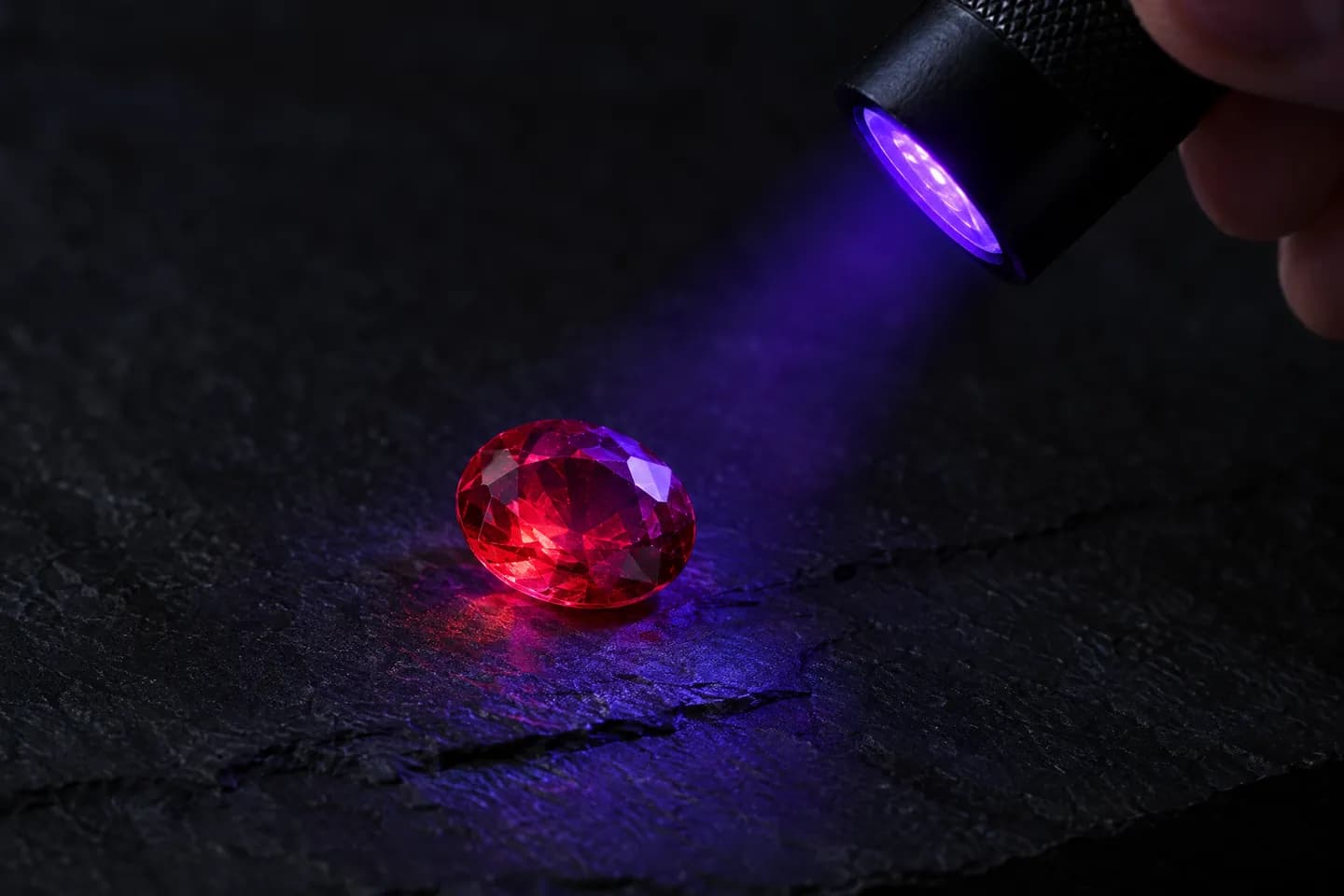
- Shine a UV torch. Chromium makes many rubies glow red. Synthetic rubies usually glow strongly because they lack iron; so do fine natural rubies with little iron, while iron-rich natural stones glow weakly. The glow narrows nothing down.
- Look from the side. A doublet can show a join line or a change in lustre. The red-ring test used on blue and green stones does not work on red ones.
- Weigh the story. A large, clean, bright "natural" ruby at a small price is a reason to stop and check.
 Illustration
What not to do: lemon juice, vinegar or cleaning products. In GIA's tests, household products — including concentrated lemon juice — etched lead-glass filler at the surface, and its care guidance warns that even mild substances can change high-lead glass. A test that damages the stone answers nothing, and the stone may not be yours.
What a loupe and a refractometer show
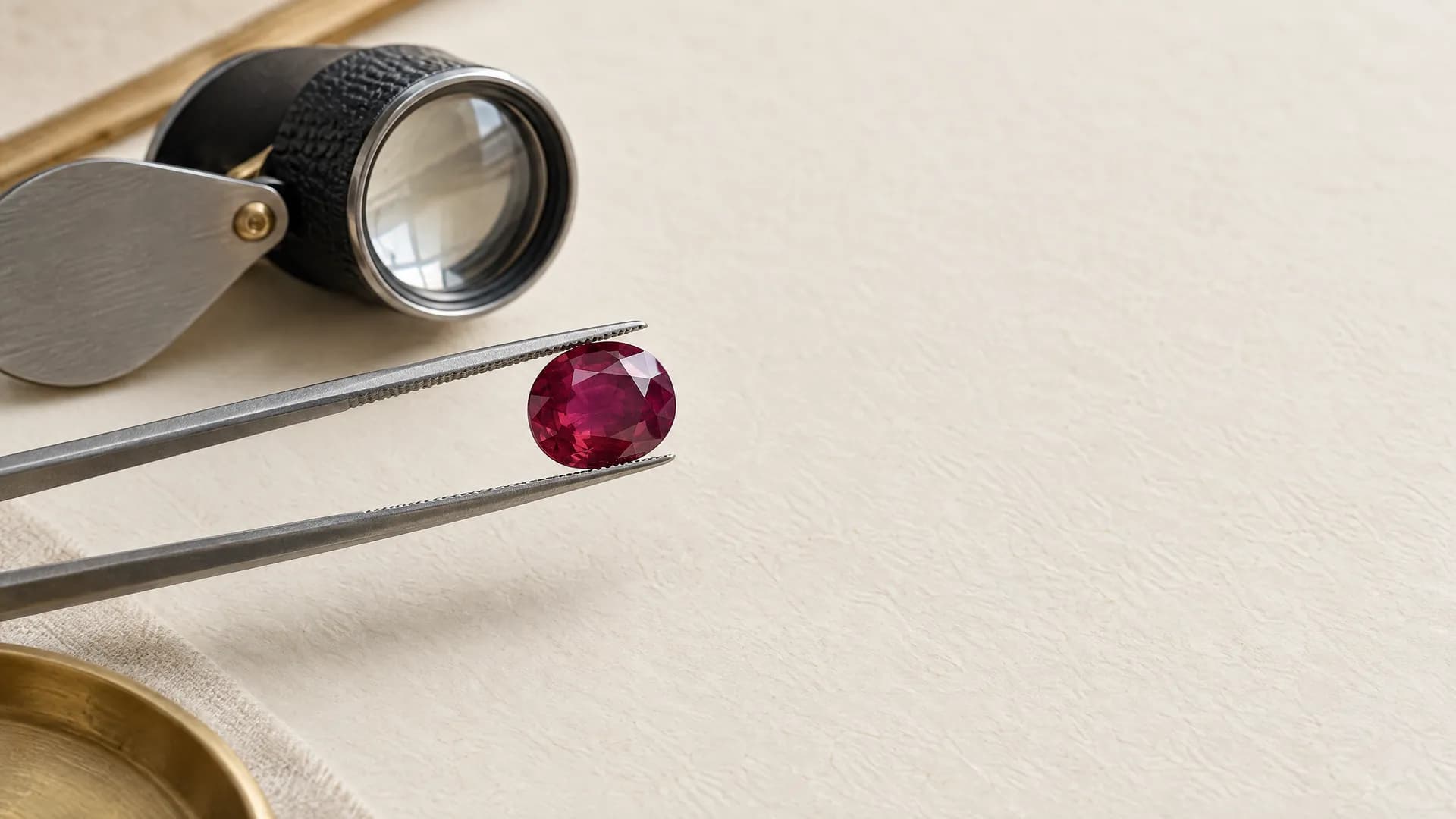
With a 10× loupe:
- Flash effect plus flattened or rounded bubbles in fractures — glass filling.
- Curved colour bands or growth lines — a flame-fusion synthetic. Natural ruby grows in straight, angular zones. The curves are often faint and easier to see under a microscope.
- Wispy, fingerprint-like patterns — healed fissures in a natural stone, or flux residue in a flux-grown synthetic. Only a lab can say which.
- Silk (fine needles) — common in natural ruby, not proof on its own.
With a refractometer, ruby reads about 1.762–1.770, with a birefringence of 0.008–0.010. Glass, garnet and spinel give a single reading, so the instrument separates them from ruby quickly. It cannot separate natural from synthetic ruby, or heated from unheated: they read the same. A glass-filled ruby also reads as ruby wherever the probe touches corundum.
Glass-filled ruby: what it is and what reports call it
Lead-glass filling was first reported by a Japanese laboratory in early 2004, and large quantities have reached international markets since. With the help of heat, lead glass is introduced into the fractures of cloudy, heavily cracked ruby, which then looks far more transparent than it is.
How reports describe it depends on how much glass there is. Under the wording harmonised by the LMHC — a committee of labs including GIA, GIT, Gübelin and SSEF:
- Glass in the fractures of a ruby: the stone is a (treated) ruby, with "clarity enhancement/modification by a glass filler", graded minor, moderate or significant.
- Pieces of ruby bound together by glass: "manufactured product" or "ruby with/and glass". The LMHC notes that if the glass is altered, such a stone may fall into pieces.
GRS, which uses its own codes, marks the heaviest filling as H(d) and notes the trade name "composite ruby".
If you own one, clean it with a damp cloth only, and tell the jeweller before any repair. The LMHC recommends taking glass-filled stones out of the setting before repair work.
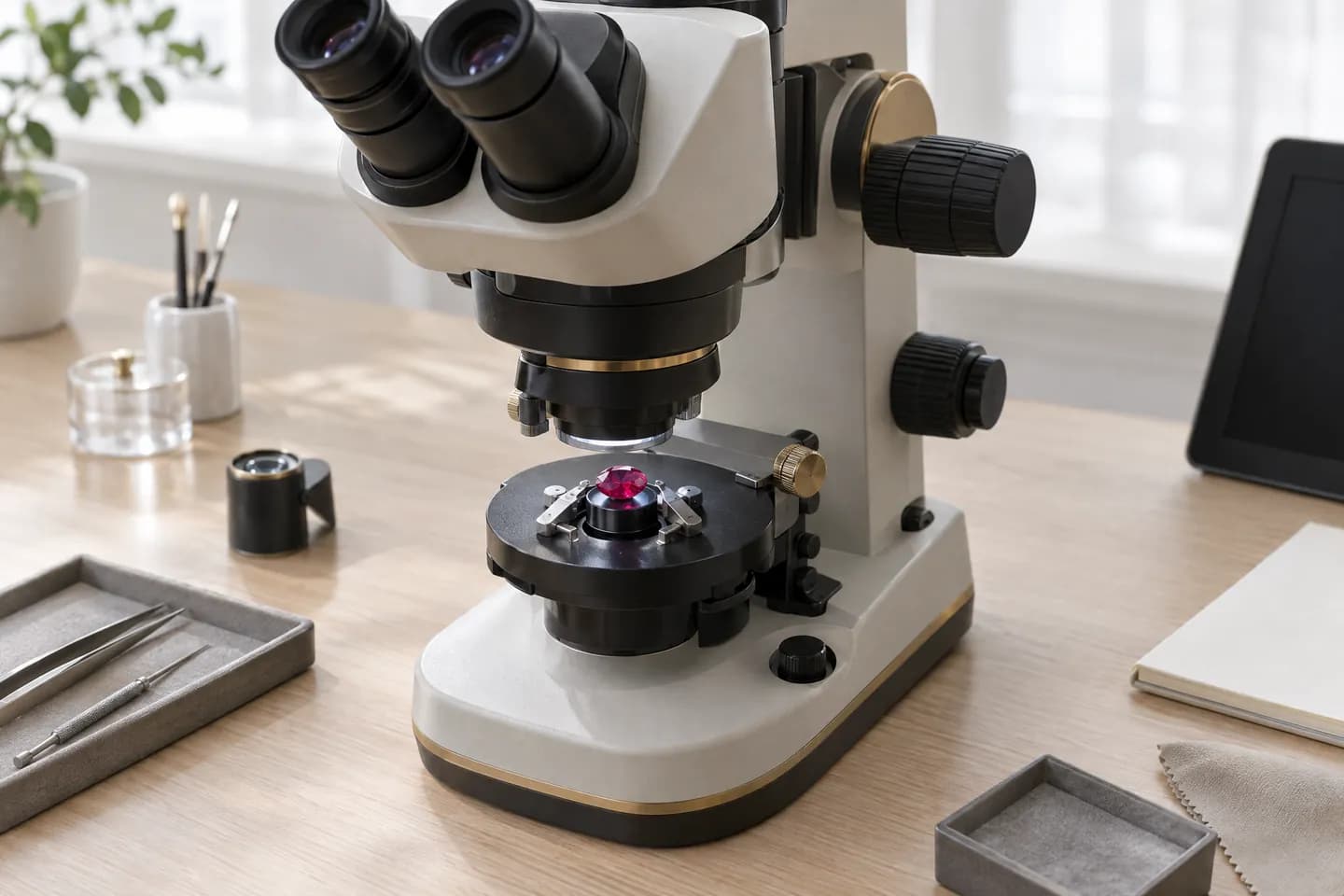
When only a lab can tell
- natural versus synthetic, especially flux-grown and hydrothermal stones;
- heated versus unheated, and heated with residues in the fractures;
- how much glass a filled ruby contains;
- diffusion of beryllium or other elements;
- country of origin, which is an expert opinion even at a lab.
 Illustration
Which report to ask for
For a ruby that matters, ask for an identification report from an established gem lab that states:
- 1.natural ruby (corundum), not synthetic;
- 2.the treatment — "no indications of heating", heating, or the type and extent of any filling;
- 3.the country of origin, if the price depends on it.
Check the report on the issuing lab's own website or by email to the lab, and compare the weight and measurements with the stone. If the report is old, or the stone has been re-cut, ask for a re-check. Why a scan proves little on its own is explained in cross-checking a lab report.
What Everystone does about it
A free Registry record puts a ruby's details and its report number in one place you can show a buyer. The record also notes when that report number has been confirmed with the lab that issued it. Matching the report to the physical stone is what an Everystone Passport adds: the report describes a stone, the passport shows it is this one. When you buy through the shop, each lot says how far it has been checked, from seller-declared to full verification, and your payment is held until you confirm the stone. More on buying safely.
Questions
How can you tell if a ruby is fake?
Start with what you can see: colour flashes inside cracks point to glass filling, a join line seen from the side points to a doublet, and round bubbles point to glass or a flame-fusion synthetic. A refractometer separates ruby from glass, garnet and spinel. Telling a natural ruby from a good synthetic, and naming its treatment, needs a gem lab.
What is a glass-filled ruby, and is it a real ruby?
It is low-grade ruby whose fractures have been filled with lead glass to make it look clear. When the glass only fills fractures, labs call it a treated ruby and grade the filling minor, moderate or significant. When pieces of ruby are bound together by glass, harmonised lab wording calls it a manufactured product, or ruby with glass. Either way it is worth less than a heated ruby and needs careful handling.
Is a lab-created ruby fake?
A lab-created ruby is real corundum grown in a factory, with essentially the same properties as natural ruby. It is not an imitation, but it is not natural, and it must be sold as synthetic, lab-grown or created. A lab report states which one you have.
Do real rubies glow under UV light?
Many do, because the chromium that makes ruby red also makes it fluoresce. Synthetic rubies usually glow strongly too, since they tend to lack the iron that dims fluorescence in many natural stones. A glow therefore proves nothing either way.
Is a heated ruby real?
Yes. Most rubies on the market have been heated, and a heated ruby is a natural ruby, as long as the treatment is disclosed. Rubies a lab confirms show no evidence of heat are rarer and command a premium.