

The marketplace
The colored-gemstone marketplace where every deal settles safely
Rubies, sapphires, spinels and more from verified dealers, jewelry stores and owners, open to every buyer. Each lot says how far it has been checked, and for every purchase the money is held and released only when the buyer confirms the stone.
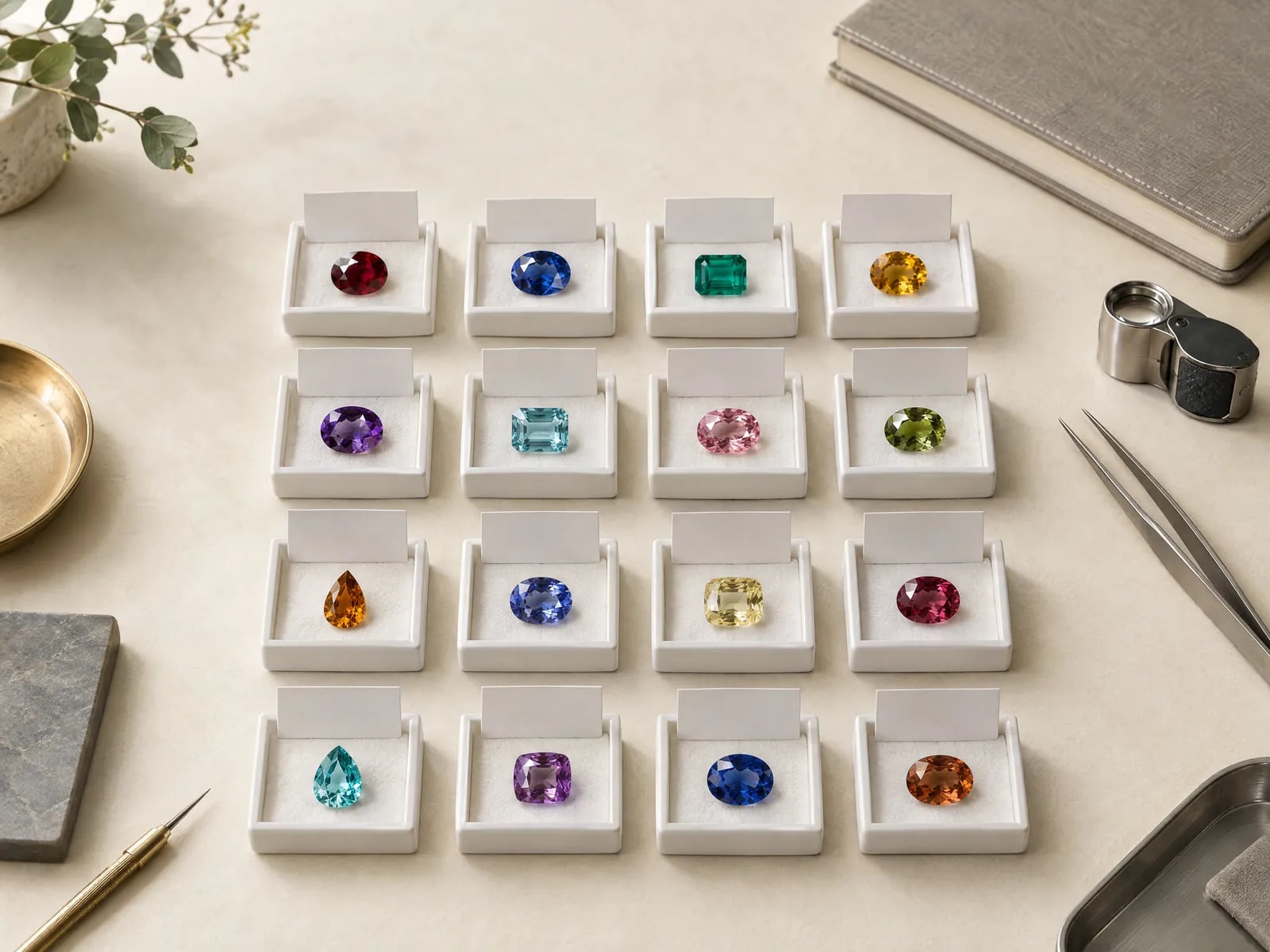 Illustration
Who are you?
One marketplace, four ways in
I'm here to buy a stone
Then you don't need to pick a role — you need stones. Every lot says what has been checked about the seller and the stone, and what happens when you buy; every purchase is a protected payment, and looking takes no account.


3,749 on the desk right now
I'm a dealer
Close faster, at better prices. Give every stone a passport and reach verified buyers.
I'm a jewelry store
List your own inventory with a passport on every stone — and be the counter where platform buyers collect theirs.
I own a fine stone
Vault it, insure it, and exit without losing 30% to the spread.
I'm selling privately
Get a verified passport and reach vetted buyers.
A deal
How a deal works
- 01
Find a stone
Browse the open shop without an account. Every lot shows its price, its verification level and its origin and treatment, as the seller declares them or as a lab report states them.
- 02
Buy it
Pay for the stone at checkout, and choose insured delivery or collection in person. A short identity check (KYC) runs alongside the payment; a verified business buys under the business check it already passed.
- 03
Make a protected payment
Your money is held, not paid to the seller. The seller confirms the stone within 48 hours, 96 at most; if they can't, you get it back in full.
- 04
Confirm, then release
Receive the stone (for a vaulted stone, the title) and check it within 48 hours. Confirm it, or let the 48 hours pass without a dispute, and the seller is paid.
On every lot
What the label tells you
Every seller is checked: a business check for dealers and jewelry stores, an identity check for private owners. Beyond that, each lot says exactly what has been verified, and we never round it up.
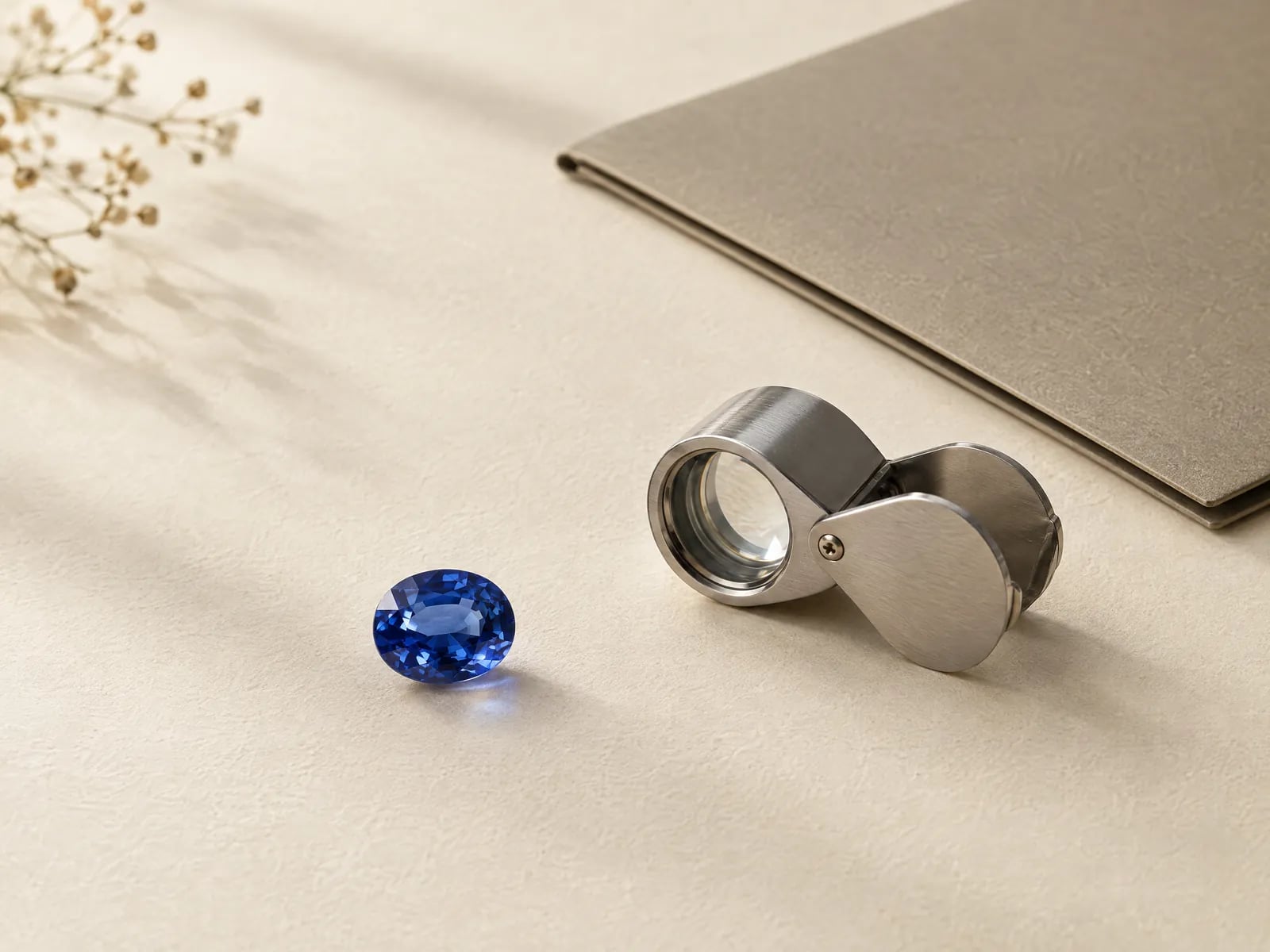 Illustration
Seller-declared
The seller has passed their check and nothing else has been verified yet: the stone is as the seller describes it.
Partly verified
Part of the lot has been checked, and the lot names which part: for example, the report cross-checked with the lab, but the metal only declared.
Full verification
Everything that applies has been checked: the seller, the report against the lab's records, the stone itself against the report and, for jewelry, the metal and the setting.
A marketplace, not an exchange
Why there is no order book
People who search for a gemstone exchange often expect bid and ask prices, as for gold. Colored stones don't work that way. Every stone is different, so there is no single price to quote: each lot has its own asking price, set by its seller. There is no bid/ask and no race to the bottom.
What the marketplace standardizes is everything around the price: the check, the label, the protected payment and the transfer. For the same reason, no app or calculator can value a sapphire from a few inputs. A price guide gives you a range; the stone's documents decide where in it yours sits.
Two doors
The open shop and the private sale-desk
The open shop lists stones from verified sellers for any buyer to browse. The sale-desk is private: owners of high-value stones sell to vetted buyers without a public listing. Both use the same safe settlement, and a stone held in custody in a free-zone vault in Bangkok changes hands without leaving it.
Where stones come from
From Mogok, Ratnapura and Muzo to one shop
The great origin markets are where stones start: Mogok in Myanmar for ruby and spinel, Ratnapura in Sri Lanka for sapphire, Colombia's mining towns for emerald. Most reach buyers through cutting and trading centers such as Bangkok. On the shop, origin is stated lot by lot, either as declared by the seller or as confirmed by a lab report, and the lot says which.
Fees
What a deal costs
Buyers
A premium of 3–7% by deal value (7% under $1,000, 5% from $1,000 to under $5,000 and 3% from $5,000), and a settlement fee of 3% on every purchase.
Sellers
No commission on a stone below $10k while we launch, whoever sells it: the buyer's premium pays our fee. From $10k, 5% when the stone sells. A private owner lists the stone from their cabinet and pays a one-time $20 listing fee; the lot goes live once the desk confirms the payment and reviews it.
Compared with an auction
As of October 2026, Christie's and Sotheby's add a 28% buyer's premium on the hammer price up to $2 million, and Sotheby's lists a standard seller's commission of 10%: almost two-fifths of the hammer price between them.
Questions people ask
Is Everystone a gemstone exchange?
No. There is no order book, no bid/ask and no price race. Each stone has its own asking price; what Everystone standardizes is the check, the label and the protected payment around it.
Who can buy on the marketplace?
Anyone. Browsing needs no account. To buy, you create an account and make a protected payment; a short identity check (KYC) runs alongside it.
Who can sell?
Verified businesses, meaning dealers and jewelry stores, list on the open shop after a business check (KYB). Private owners list their own stone from their cabinet for a one-time $20 listing fee; it goes live once the desk confirms the payment and reviews it, and owners of high-value stones can also sell privately through the sale-desk.
How is my money protected?
Your money is held, not paid to the seller. It is released when you confirm the stone; before that you can ask for more photos or video, or an independent check.
Are all stones on the marketplace verified?
Every seller is. Stones vary, and each lot says how far it has been checked: Seller-declared, Partly verified or Full verification. You can filter the shop to fully verified lots only.
See what is on the marketplace today
Browsing needs no account. Every lot shows how far it has been checked, and every purchase is a protected payment.