

Selling an alexandrite
Sell your alexandrite without losing a large share to the spread
With alexandrite, a buyer pays for two things they can't take on trust: a natural stone and a real color change. Prove both with a lab report, sell the stone to a buyer who has passed KYC, and settle safely through Everystone, for a 0–5% commission rather than a cash buyer's discount.
 Illustration
What sets the price
What a buyer pays for in an alexandrite
Five things decide most of the price. A fair offer accounts for all of them; a low one usually prices in doubt about one of them.
The color change
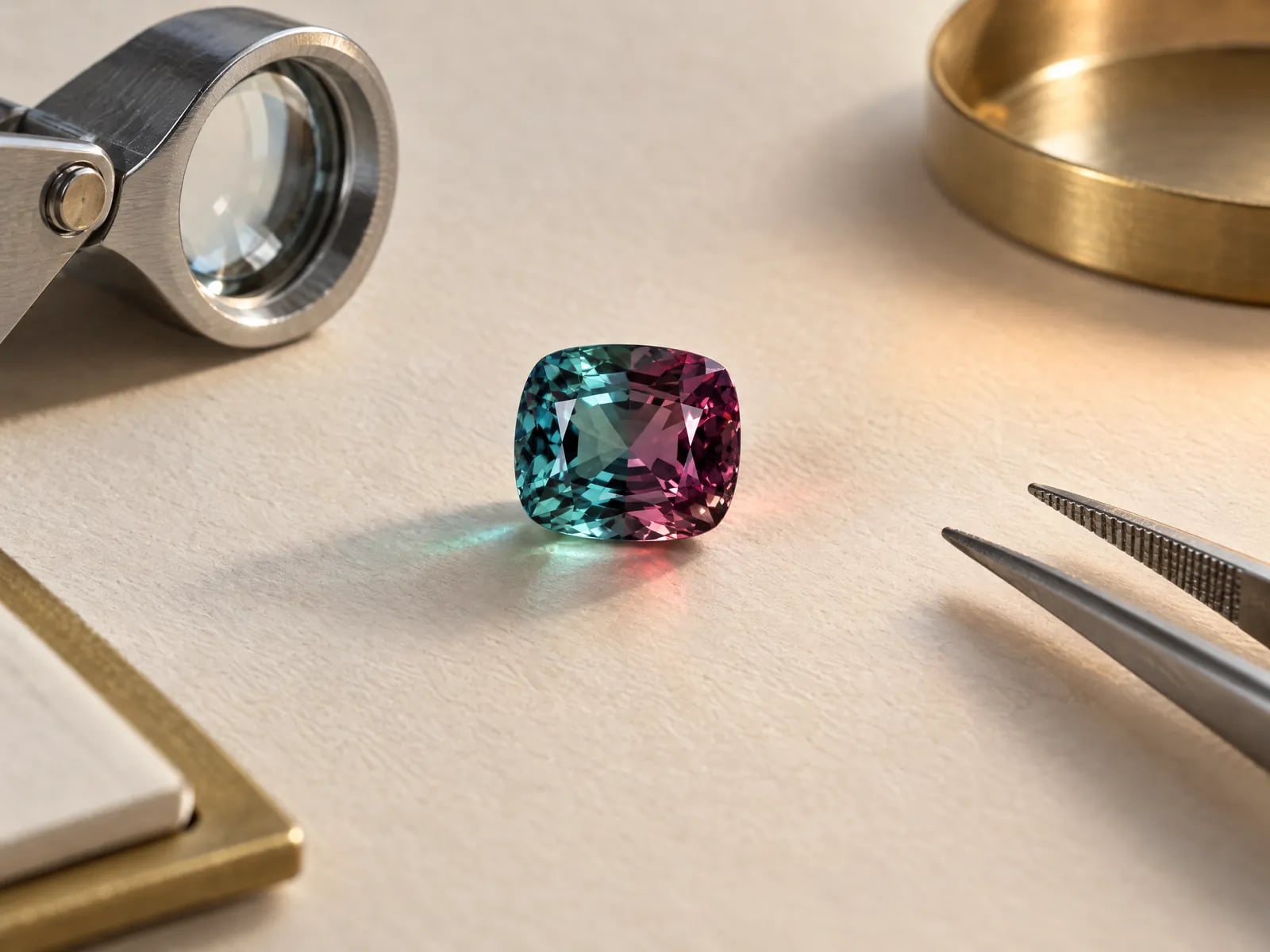
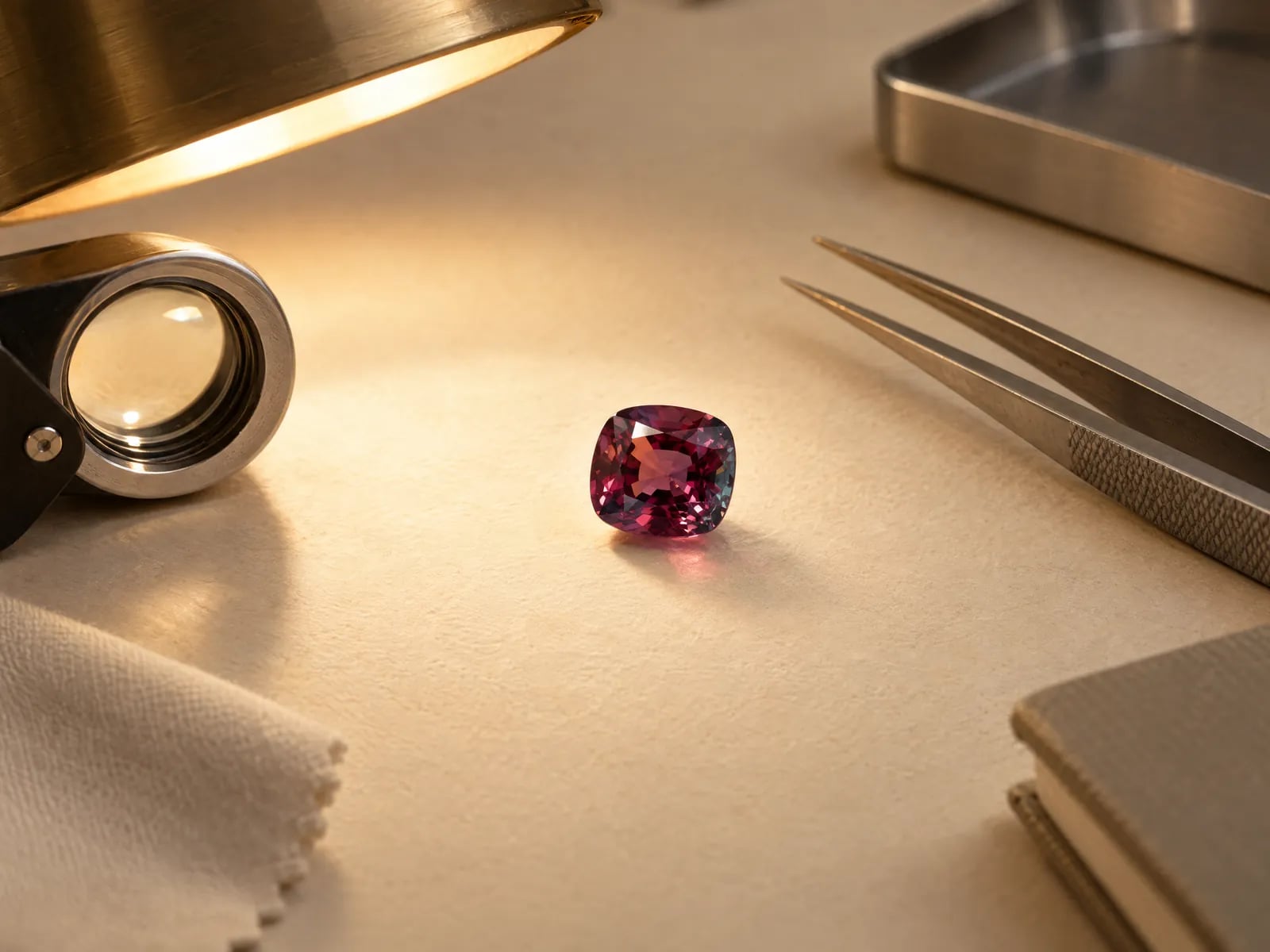
Most of the price is the change itself: from green or bluish green in daylight to red or purplish red under incandescent light. A strong, near-complete change between two clean colors is worth far more than a weak or brownish one.
Natural, not lab-grown
Lab-grown alexandrite has been made for decades and can look convincing. For a buyer, a report from a recognized laboratory confirming a natural stone is not a nice-to-have; it is the sale.
Origin
The original Russian stones from the Urals set the reputation; Brazil, Sri Lanka, India and East Africa supply most alexandrite today. An origin on the report matters most at the top of the market.
Treatment and clarity
Treatment is uncommon in alexandrite, though fractures in lower-grade stones are sometimes filled; the report will say. Clean stones show the change best.
Size and cut
Fine alexandrite above one carat is rare, and above three to five carats very rare. Many stones are cut for weight and look dark; a good cut can be worth more than the extra carats.
Before you sell
Show both colors
An alexandrite sells on photographs that show both of its colors under named light: daylight, or a daylight-equivalent lamp, and warm incandescent light. Pictures taken through filters or under mixed light make a buyer suspicious, and they should.
Other stones change color too, among them some sapphires, garnets and spinels. A report identifies the species, which is why a color-change stone without one is priced as a question mark.
The spread
Why the first cash offer is below what a buyer would pay
A dealer who buys your alexandrite for cash is buying risk as well as a stone. They don't know how long it will take to resell, their money is tied up until then, and without a recent lab report they must allow for the chance that the treatment or origin is not what you were told. The discount that covers all of that is the spread.
Auctions are not much kinder. At the major auction houses, as of October 2026, the seller's standard commission is about 10% and the buyer pays a 28% premium on top of the hammer price up to $2 million; what a buyer pays in premium comes out of what they are willing to bid.
Much of the spread is the price of doubt. A stone whose report has been checked against the lab's records, whose treatment is stated plainly, sold to a buyer whose money is held until they confirm, leaves far less room for it.
Selling through Everystone
How your alexandrite gets from the drawer to a buyer
Everystone does not buy stones. We check the stone and its paperwork, put it in front of buyers and settle the sale safely.
 Illustration
- 01
Tell the desk what you have
The stone, its report if there is one, and where it is now. The desk comes back within one business day with the route that fits its value.
- 02
Check the stone and its paper
The report is cross-checked against the lab's own records. If you want a passport, the stone itself is inspected against the report: $750 once per stone, optional at any price.
- 03
Put it in front of buyers
Privately through the sale-desk, or on the open shop: listed from your cabinet, or through a vetted dealer. Every buyer passes an identity check (KYC), and you are paid only after the buyer confirms the stone.
- 04
Protected payment, then payout
The buyer pays, and the money is held. When they confirm the stone, it is released to you: in full below $10k while we launch, less a 5% commission from $10k.
What it costs
What you pay, and when
A Registry record: free
For an individual owner: the stone's certificate cross-checked against the lab's records, with a QR page. A sensible first step at any value.
Listing it for sale: $20/month
You list the stone from your cabinet and pay the account when you list it; the desk confirms the payment and reviews the lot before it goes live. A lot is not published without it, and it is hidden again if the month lapses.
A passport, if you want one: $750
Optional at any price, once per stone: the stone inspected against its report, and a passport stating that this paper describes this stone. Order it to sell faster; otherwise a buyer can.
Commission on a sale: 0–5%
None below $10k while we launch: the buyer's premium pays our fee. 5% from $10k, charged only when the stone sells. The buyer pays their own premium (3–7% by deal value) and the settlement fee.
Custody from $30k: 3.5% a year
Optional, after a one-time custody onboarding: a free-zone vault in Bangkok, insurance at documented value, and a sale that never moves the stone.
Questions people ask
How do I know my alexandrite is natural?
Only a laboratory can tell you with confidence. Lab-grown alexandrite has the same chemistry as natural and has been on the market for decades; a recognized lab separates the two by inclusions and growth features you won't see with a loupe.
Is a color-change garnet or sapphire an alexandrite?
No. Alexandrite is a variety of chrysoberyl. Garnet, sapphire and spinel can change color too, and they can be fine stones, but they are priced on their own scales. A lab report names the species.
Does Everystone buy alexandrites?
No. Everystone holds no stock and buys nothing on its own account. We check the stone and its paperwork, bring buyers and settle the sale safely. If you need cash today, a dealer will pay it, at the spread described on this page.
Can I list it on the shop myself?
Yes. Open the stone in your cabinet, choose "Sell this stone", set your price and pay the $20/month account; the desk confirms the payment and reviews the lot before it goes live. You can also sell through a vetted dealer. Either way the deal settles safely through Everystone.
What does it cost to sell?
Registering a stone is free. To sell it, list it from your cabinet and pay the $20/month account; the lot goes live once the desk confirms the payment and reviews it. The commission is charged only when the stone sells: none below $10k while we launch (the buyer's premium pays our fee), 5% from $10k. A passport is optional at any price: the stone checked against its report, $750 once per stone. The buyer pays their own premium and the settlement fee.
Ready to sell your alexandrite?
Tell the desk what you have. You'll hear back within one business day with the route, what it costs and what a buyer will ask to see.