

Selling a Paraíba tourmaline
Sell your Paraíba tourmaline without losing a large share to the spread
A Paraíba tourmaline is worth what its report can say: copper-bearing tourmaline and, ideally, where it came from. With that in hand, sell the stone to a buyer who has passed KYC and settle safely through Everystone, for a 0–5% commission instead of a cash buyer's discount.
You start with a free account. The record and its QR page are yours, and you can come back to them any time. Rather talk to the desk first? Write to us.
 Illustration
What sets the price
What a buyer pays for in a Paraíba tourmaline
Five things decide most of the price. A fair offer accounts for all of them; a low one usually prices in doubt about one of them.
Color
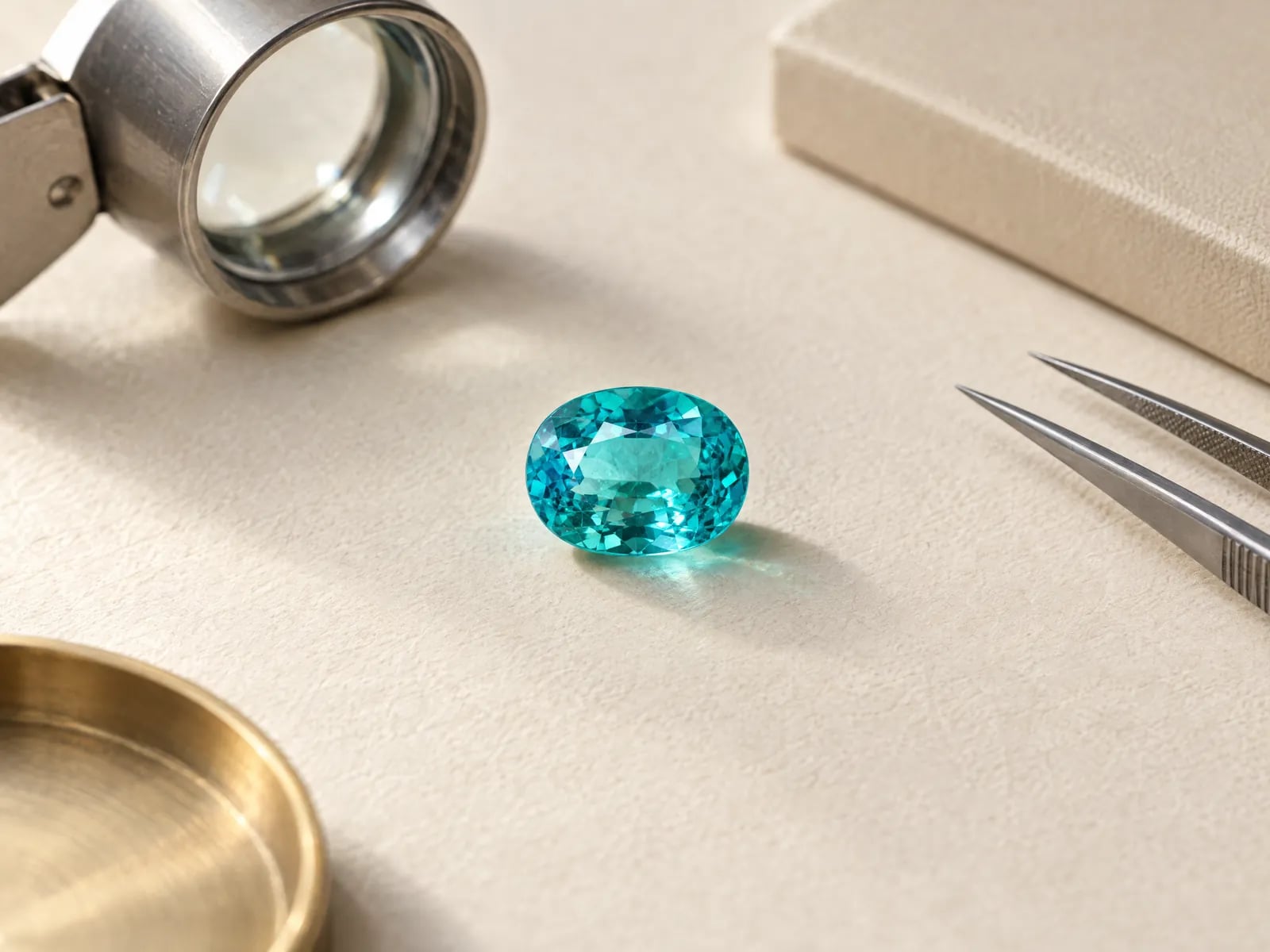
Paraíba is priced on its electric, “neon” blue to green-blue. Saturation is everything: paler, grayer or greener stones sell for much less.
Copper, confirmed
“Paraíba” is a trade name for tourmaline colored by copper (and manganese). Many labs apply it to copper-bearing tourmaline from any source; without a report confirming copper, it is just a blue tourmaline to a buyer.
Origin
Brazil, where the stone was found in the late 1980s in the state of Paraíba, carries the highest premium. Mozambique produces larger stones and Nigeria smaller amounts. Origin reports for Paraíba tourmaline are increasingly available.
Treatment
Heating is common and generally accepted. Filling of fractures is less accepted and lowers the price; the report states what was found.
Size and clarity
Most Paraíba is small and included. Fine stones above a carat are scarce, especially from Brazil, and a clean, saturated stone commands a clear premium.
Paper first
Why the report is the sale
Few stones depend on paper as much as Paraíba. Blue-green tourmaline without copper, apatite and glass are all sold as “Paraíba” to people who can't tell the difference. A buyer paying Paraíba prices will want a report from a recognized laboratory stating copper-bearing tourmaline, and preferably the origin.
If your stone has an older report, or one from a lab the buyer doesn't know, a new report before you sell is usually money well spent. The desk can tell you what a buyer at your price level will expect.
The spread
Why the first cash offer is below what a buyer would pay
A dealer who buys your Paraíba tourmaline for cash is buying risk as well as a stone. They don't know how long it will take to resell, their money is tied up until then, and without a recent lab report they must allow for the chance that the treatment or origin is not what you were told. The discount that covers all of that is the spread.
Auctions are not much kinder. At the major auction houses, as of October 2026, the seller's standard commission is about 10% and the buyer pays a 28% premium on top of the hammer price up to $2 million; what a buyer pays in premium comes out of what they are willing to bid.
Much of the spread is the price of doubt. A stone whose report has been checked against the lab's records, whose treatment is stated plainly, sold to a buyer whose money is held until they confirm, leaves far less room for it.
Selling through Everystone
How your Paraíba tourmaline gets from the drawer to a buyer
Everystone does not buy stones. We check the stone and its paperwork, put it in front of buyers and settle the sale safely.
 Illustration
- 01
Tell the desk what you have
The stone, its report if there is one, and where it is now. The desk comes back within one business day with the route that fits its value.
- 02
Check the stone and its paper
The report is cross-checked against the lab's own records. If you want a passport, the stone itself is inspected against the report: $750 once per stone, optional at any price.
- 03
Put it in front of buyers
Privately through the sale-desk, or on the open shop: listed from your cabinet, or through a vetted dealer. Every buyer passes an identity check (KYC), and you are paid only after the buyer confirms the stone.
- 04
Protected payment, then payout
The buyer pays, and the money is held. When they confirm the stone, it is released to you: in full below $10k while we launch, less a 5% commission from $10k.
What it costs
What you pay, and when
A Registry record: free
For an individual owner: the stone's certificate cross-checked against the lab's records, with a QR page. A sensible first step at any value.
Listing it for sale: $20 once
You list the stone from your cabinet and pay its listing fee once; the desk confirms the payment and reviews the lot before it goes live. A lot is not published without it, and it stays live until it sells, with nothing to renew. Your account itself is free.
A passport, if you want one: $750
Optional at any price, once per stone: the stone inspected against its report, and a passport stating that this paper describes this stone. Order it to sell faster; otherwise a buyer can.
Commission on a sale: 0–5%
None below $10k while we launch: the buyer's premium pays our fee. 5% from $10k, charged only when the stone sells. The buyer pays their own premium (3–7% by deal value) and the settlement fee.
Custody from $30k: 3.5% a year
Optional, after a one-time custody onboarding: a free-zone vault in Bangkok, insurance at documented value, and a sale that never moves the stone.
Questions people ask
Where can I sell a Paraíba tourmaline?
Through Everystone, a private owner lists the stone from their cabinet on the open shop, or sells through the sale-desk or a vetted dealer, and the deal settles safely. You can also sell to a dealer for cash, at a discount, or at auction, where the major houses (as of October 2026) charge the seller about 10% and add a 28% buyer's premium to the hammer price.
Is a Mozambique Paraíba worth less than a Brazilian one?
At the same color and size, Brazilian stones usually sell at a premium: the name started there, and Brazilian production has always been small. A fine, saturated Mozambique stone can still be worth more than a weak Brazilian one, because color comes first.
Does Everystone buy Paraíba tourmalines?
No. Everystone holds no stock and buys nothing on its own account. We check the stone and its paperwork, bring buyers and settle the sale safely. If you need cash today, a dealer will pay it, at the spread described on this page.
Can I list it on the shop myself?
Yes. Open the stone in your cabinet, choose "Sell this stone", set your price and pay a one-time $20 listing fee; the desk confirms the payment and reviews the lot before it goes live. You can also sell through a vetted dealer. Either way the deal settles safely through Everystone.
What does it cost to sell?
Registering a stone and your owner account are free. To sell it, list it from your cabinet and pay a one-time $20 listing fee for the lot; it goes live once the desk confirms the payment and reviews it, and stays live until it sells. The commission is charged only when the stone sells: none below $10k while we launch (the buyer's premium pays our fee), 5% from $10k. A passport is optional at any price: the stone checked against its report, $750 once per stone. The buyer pays their own premium and the settlement fee.
Ready to sell your Paraíba tourmaline?
Tell the desk what you have. You'll hear back within one business day with the route, what it costs and what a buyer will ask to see.