

Chanthaburi gem market: a buyer's guide
When the Chanthaburi gem market runs, how its brokers work, what a visitor can expect, and how to check a stone before you pay.
 Illustration
The Chanthaburi gem market is a wholesale street market in the old town of Chanthaburi, about 250 km east-southeast of Bangkok, and it trades from Friday to Sunday. From mid-morning, dealers, brokers and buyers fill Si Chan Road and the lanes around Trok Krachang (often spelled Trok Kachang), and the liveliest trading runs from late morning into the early afternoon. It is a working trade floor, not a tourist bazaar: you are welcome to watch and to buy, but the market assumes you know what you are looking at.
When and where it runs
| Days | Friday, Saturday and Sunday. Some shops on Si Chan Road open on weekdays, but the street trade is a weekend affair. |
| Hours | Stands go up from about 10 a.m. Trading is liveliest from late morning to early afternoon and winds down later in the day. |
| Where | Si Chan (Sri Chan) Road, known locally as Gem Road, and Trok Krachang, near the riverside old town. The center of the action is where Si Chan meets Thetsaban Road. |
| From Bangkok | About 250 km by road. Buses and minibuses leave the Eastern (Ekkamai) and Northern (Mo Chit) terminals through the day and take four to five hours. Check current timetables before you travel. |
| From Pattaya | Minibuses take about three hours. |
Days and hours as checked in October 2026; they move with the season and around public holidays, so if you are travelling for the market, confirm the day locally before you set off.
How the market works
The first surprise is that most of the people sitting at the tables are buyers, not sellers. A buyer takes a table, out on the street or in one of the covered trading halls along Si Chan Road, and often puts up a sign listing what they want: the stone, the color, the size. Then they wait.
 Illustration
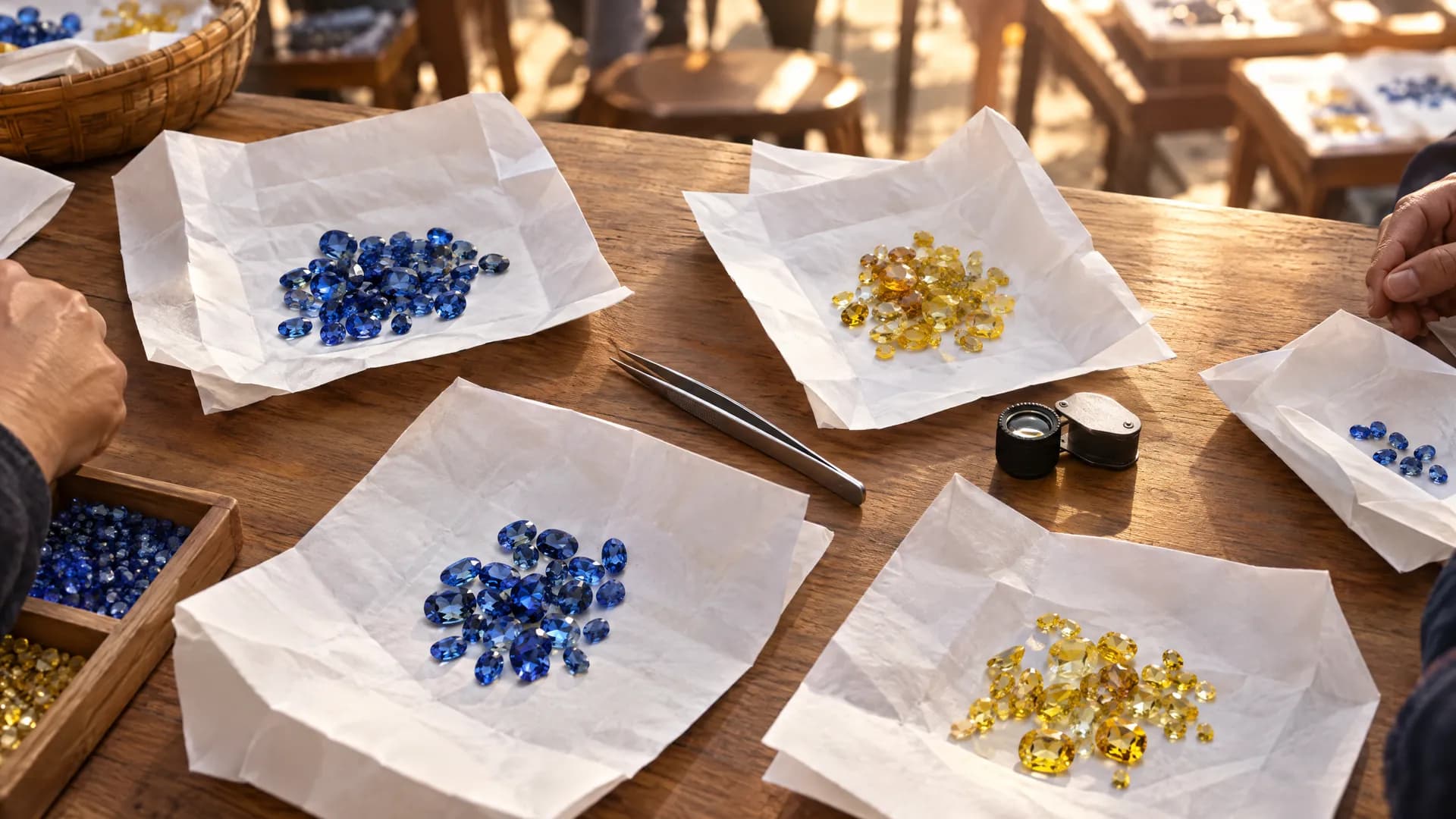
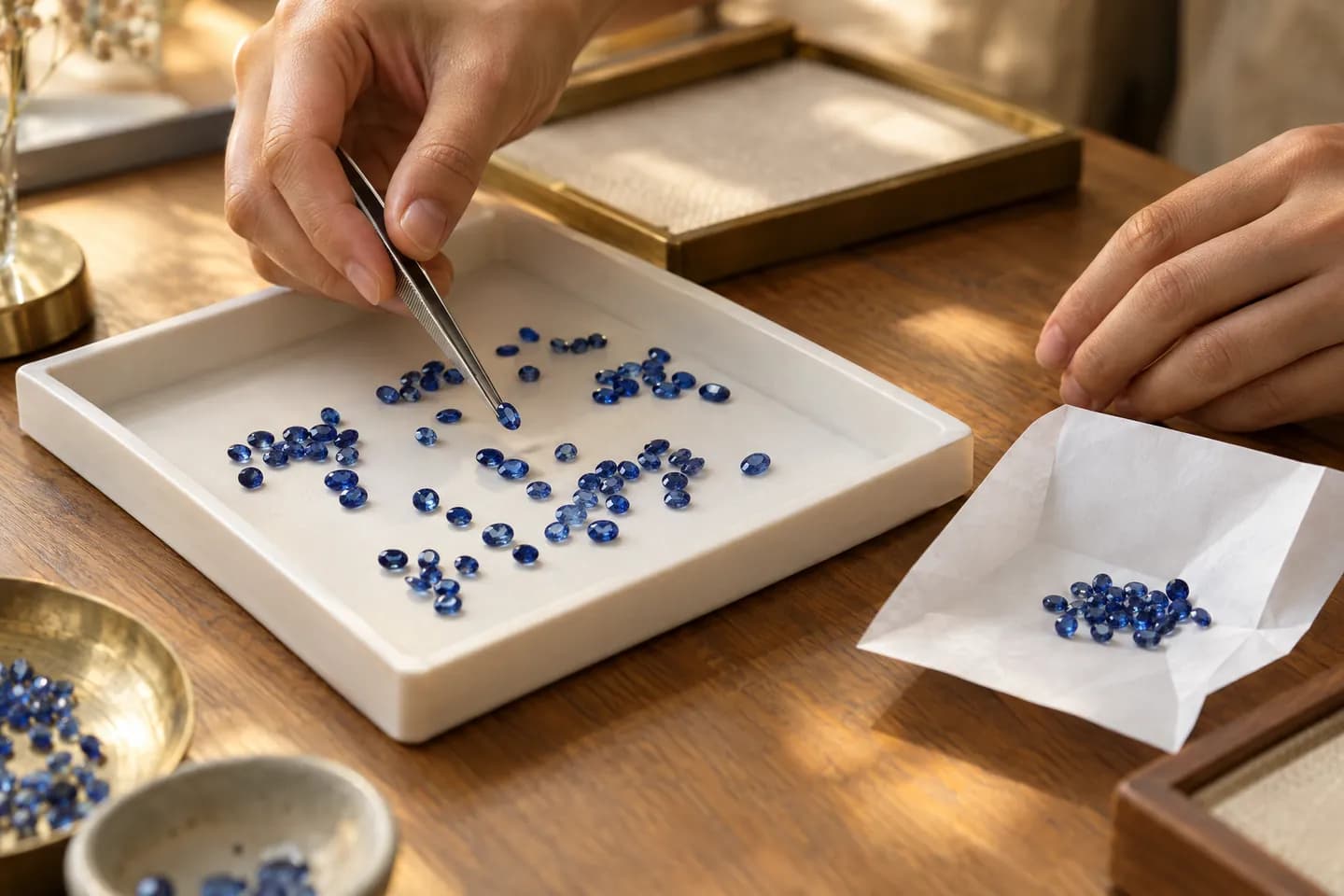
The stones come to them. Brokers working for dealers and cutting workshops walk the market with parcels, gems folded in paper, and lay them out in front of the buyers. Prices are quoted per carat and haggled on a calculator, which works when buyer and seller share no language. A buyer who wants to make an offer typically seals the parcel with tape and writes the offer on it, so nothing can be swapped while the broker carries it back to the owner. If the owner accepts, the broker earns a small commission. When GIA reported from the market in 2013, the table owners also took a commission on deals done at their tables.
The buyers are mostly professionals: Thai manufacturers who supply Bangkok's jewelry exporters, and dealers from India, Pakistan, the Middle East, China and elsewhere buying for their own markets. That shapes everything else. Stones move in parcels, at trade prices, between people who can judge them in seconds with a loupe and a pair of tweezers.
What is for sale: rough, cut and a lot of heat
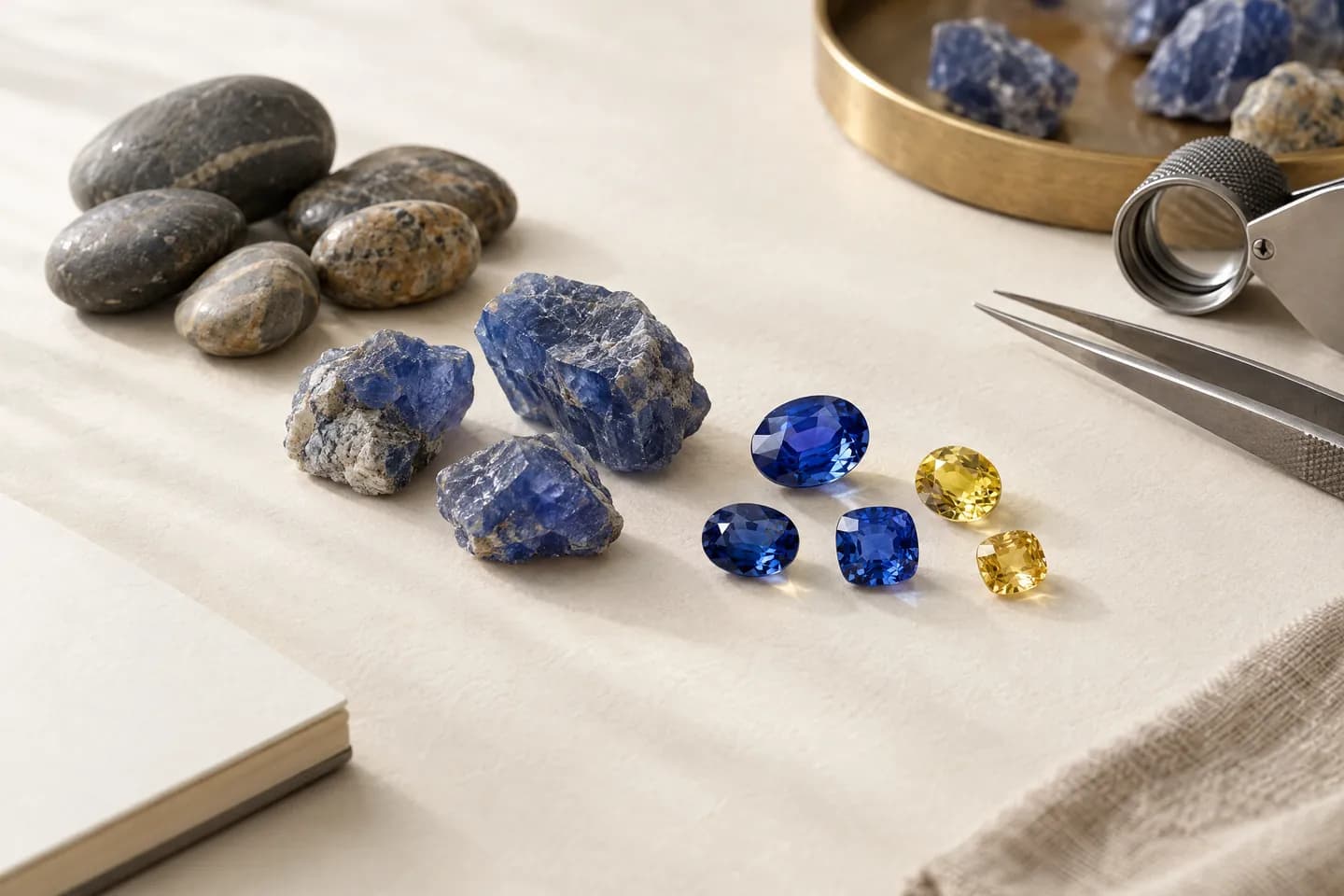
Ruby and sapphire in every color dominate, with spinel, garnets such as tsavorite and spessartite, tourmaline and quartz alongside. Little of it was mined nearby. The province's own deposits were largely worked out during the last century, though some mining continues near Khao Ploi Waen, west of town, mostly for yellow sapphire. Most rough now arrives from abroad, rubies from Mozambique, Madagascar and Myanmar and sapphires from Sri Lanka and Madagascar, to be heated, cut and sold on.
 Illustration
Heat is the town's specialty. Local treaters built Chanthaburi's modern heating industry from the late 1960s, and the side streets behind the market hold dozens of "burners", furnace workshops that rarely put up a sign but are well known to the trade. Assume any ruby or sapphire you are offered has been heated unless a lab report says otherwise; GIA notes that most ruby on the market has been, and heating is normal in the trade. In a 2013 GIA report from the market, one dealer summed up treatment disclosure in five words: "The price is the disclosure." A very low per-carat price tells a professional what kind of material it is. It tells a visitor nothing in writing.
Both rough and cut stones change hands. Rough mostly goes to people who will heat and cut it themselves.
What a visitor can and cannot expect
You can expect:
- to watch one of the world's busiest colored-stone markets at work, at no cost;
- trade prices on single stones and small parcels, if you know the goods;
- a wide range of colors and qualities, from cheap commercial material to finer stones held back for known buyers.
You should not expect:
- written treatment disclosure unless you ask for it and get it written down;
- a lab report with the stone, since most parcels have none;
- returns, refunds or anyone to complain to after you leave;
- to pay by card: deals at the tables are usually settled in cash, or on terms agreed between regulars;
- English at every table;
- that what looks right under a loupe is right. Lab-grown corundum, glass-filled ruby and diffusion-treated sapphire all circulate in the colored-stone trade, and some of them fool experienced eyes.
How to check what you buy
- 1.Decide before you go. Know the stone, color and size you want, and your ceiling price. Single stones are easier to judge than mixed parcels.
- 2.Ask the treatment question directly. Heated? Anything else: diffusion, glass, oil? Write the answer on the parcel paper and on your receipt.
- 3.Look before you pay. A 10× loupe and a small flashlight catch obvious problems, such as gas bubbles or glassy flashes in cracks. They cannot prove a stone natural or unheated.
- 4.Make any serious purchase conditional on a lab test. Several independent labs operate in Bangkok, and small private labs near the market issue quick reports; for a costly stone, use a lab whose reports your eventual buyer will accept. Agree in writing that you can return the stone if the report contradicts what you were told, and for how long.
- 5.Get a proper receipt. Species, weight, color, treatment as stated, price, date, and the seller's name and contact details.
- 6.Keep the paperwork with the stone. When you sell, the next buyer will ask for the receipt and the report. A report number can be checked against the issuing lab's records; see how to cross-check a lab report.
What Everystone does about it
Everystone does not trade in Chanthaburi's market and cannot vouch for anything bought there. What we run is the other end of the same deal. If you would rather buy one stone with its paperwork in view, the shop states on every lot how far it has been checked, from seller-declared to full verification. Every purchase is a protected payment: your money is held until you have the stone and confirm it, and you can arrange an independent check during the inspection window.
If you came home from Chanthaburi with a stone and a lab report, you can add it to the Registry for free. Once the report number is confirmed with the issuing lab, the record is labeled "paper cross-checked" — exactly that and no more. It does not prove the paper belongs to the stone in your hand; that takes a hands-on check, explained in how it works.
Questions
What days is the Chanthaburi gem market open?
The street market runs Friday to Sunday, with the liveliest trading from late morning into the early afternoon. Some gem shops on Si Chan Road also open on weekdays, but the brokers and the buyers' tables are a weekend scene. Hours shift around holidays, so confirm locally before a long trip.
Are gems cheaper in Chanthaburi?
Chanthaburi trades at wholesale prices, per carat and often by the parcel, so prices can sit well below retail. That only helps if you can judge the stone: most parcels come without lab reports, treatments are rarely written down, and there are no returns. A low price for a stone you cannot verify is not a bargain.
Are Chanthaburi gems heated?
Assume so unless a lab report says otherwise: GIA notes that most ruby on the market has been heated, and Chanthaburi is one of the world's main centers for gem heat treatment. Heating is accepted practice when it is disclosed, but it changes value, so ask directly, get the answer in writing, and confirm it with a lab report for anything costly.
How do I get from Bangkok to Chanthaburi?
Chanthaburi is about 250 km from Bangkok by road. Buses and minibuses leave the Eastern (Ekkamai) and Northern (Mo Chit) terminals through the day and take four to five hours; check current timetables before you travel. From Pattaya, minibuses take about three hours.


