

Heated vs unheated: what the difference is, and what it does to price
Heated vs unheated sapphire and ruby: what heat does, how labs detect it, why unheated stones cost more, and which other treatments change value.
 Illustration
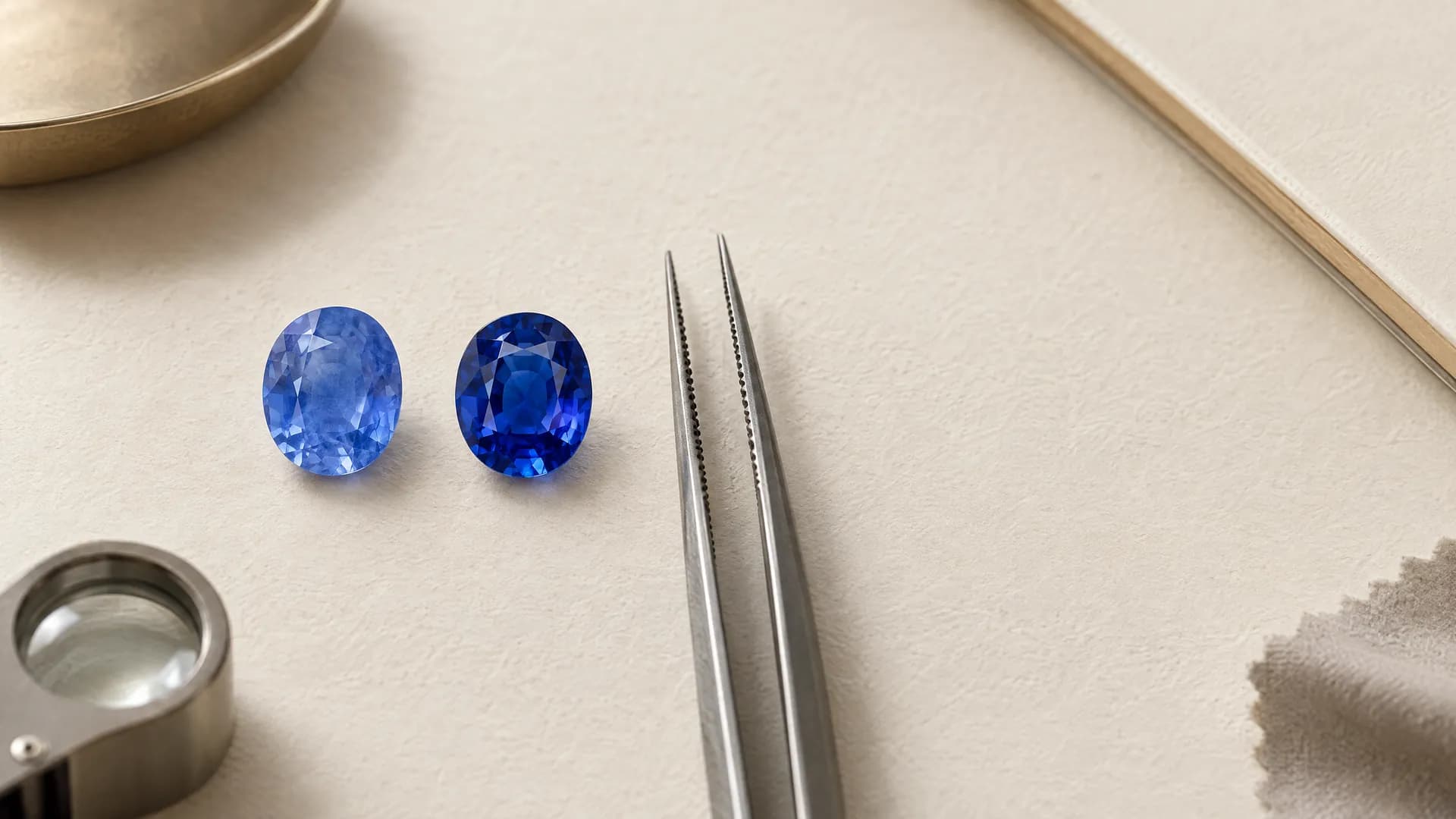
A heated sapphire or ruby is a natural stone that was warmed in a furnace, anywhere from several hundred degrees to about 1,800 °C, to improve its color or clarity. An unheated stone is one in which a gem lab finds no sign of that. Heating is centuries old, permanent and accepted when it is disclosed; unheated stones cost more because a fine stone that needed no help is rare.
What heat does to a sapphire or ruby
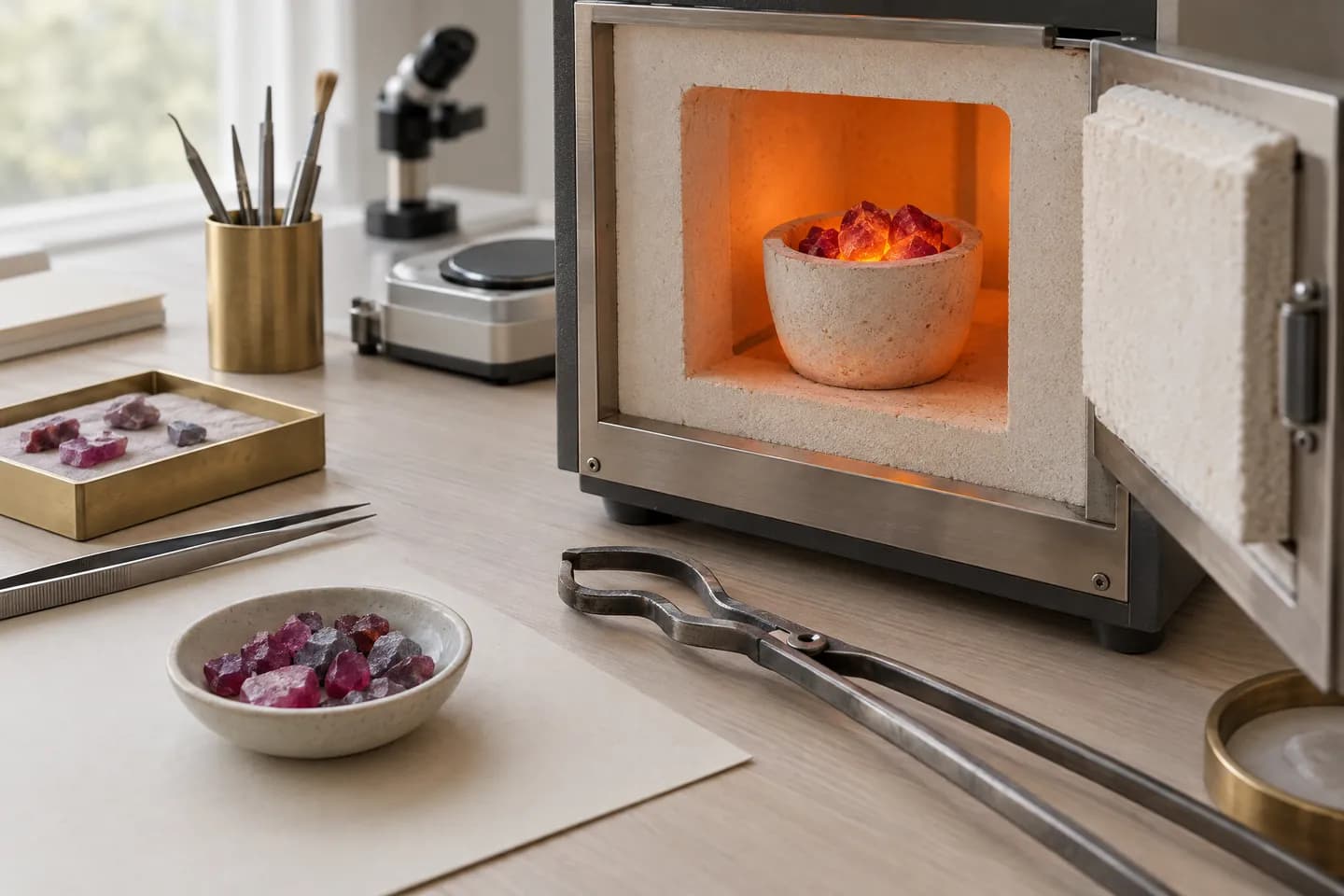
Much of the corundum that comes out of the ground is not attractive enough to sell as it is. Heat changes that in several ways.
- It dissolves silk. Fine needles of rutile, called silk, make a stone hazy. At high temperatures they dissolve, and the titanium they release pairs with iron in the crystal to deepen blue color.
- It cleans up color. Heating removes a purplish tint from ruby and can intensify, or even create, blue in sapphire. At lower temperatures it can lighten stones that are too dark.
- It turns waste into gems. Milky, greyish Sri Lankan rough called geuda was once thought worthless. Thai treaters found in the 1970s and 1980s that heat turns it transparent and saturated blue.
- It is old and stable. Records of heating ruby and sapphire go back more than a thousand years. Heat-only results are permanent in normal wear, though heated stones can be slightly more brittle.
 Illustration
Most blue sapphire on the market today has been heated, and heating touches a high proportion of corundum in general.
How a lab tells
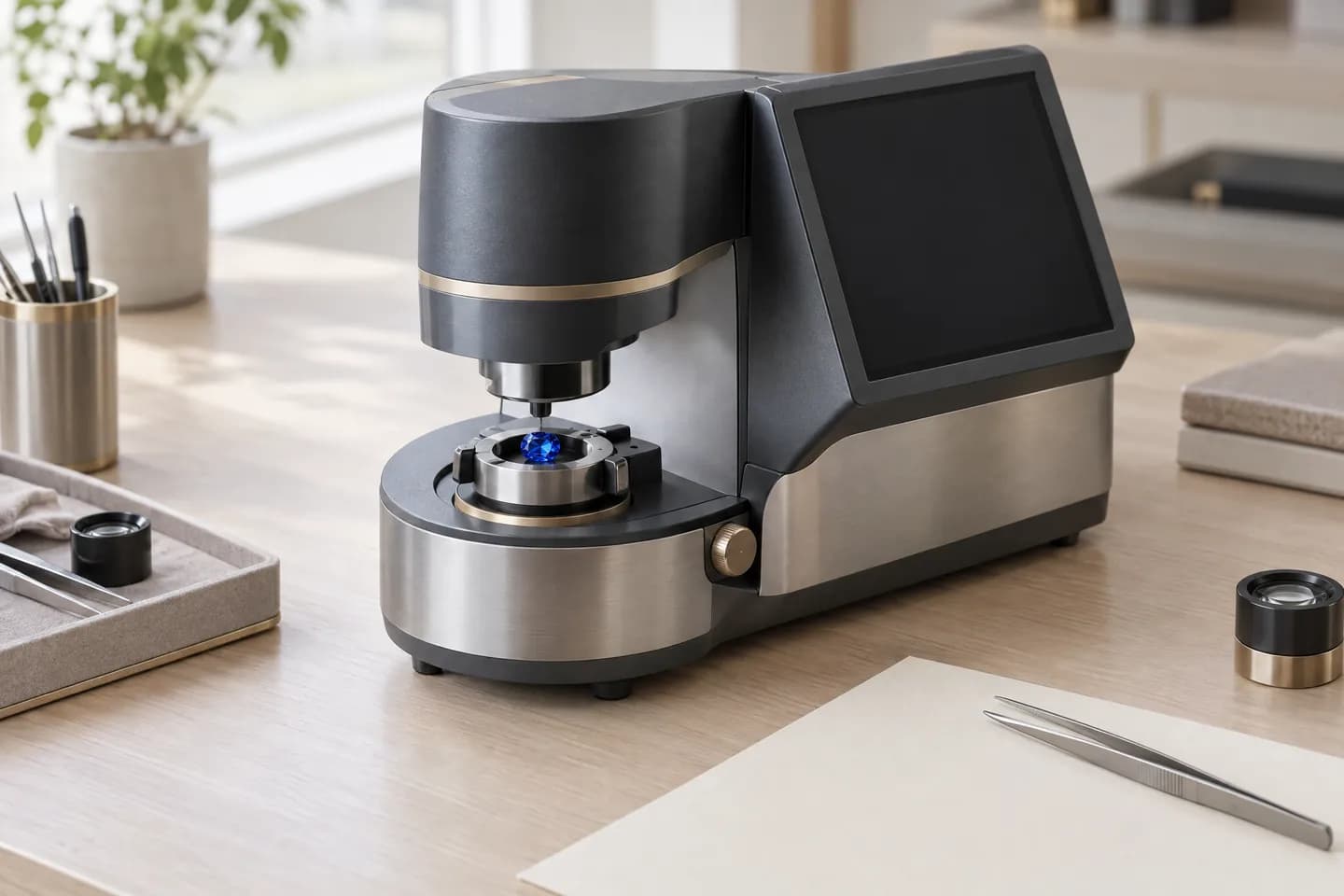
No single test settles it. Labs combine three kinds of evidence.
- Inclusions under the microscope. Mineral crystals inside a heated stone expand and crack, leaving disc-shaped fractures around them. Silk breaks into dotted lines or disappears. Healed fissures can hold glassy residues from the flux used during heating.
- Spectroscopy. Infrared and Raman spectra pick up changes the eye cannot see. Some mineral inclusions transform at known temperatures: diaspore turns into corundum at about 525–550 °C, goethite into hematite at about 300–325 °C. Finding them intact is strong evidence that a stone was never heated.
- Fluorescence. Stones heated to high temperatures can develop a chalky glow under short-wave ultraviolet light.
 Illustration
The hard case is low-temperature heating. Between roughly 700 and 1,200 °C, inclusions may change very little or not at all, and intact silk only proves that a stone was not heated to high temperatures. Because a premium is paid for unheated stones, some treaters now heat gently in the hope of escaping detection, and labs keep refining their methods in response. That is also why reports choose their words carefully.
| Report wording | What it means |
|---|---|
| No indications of heating | The lab found no evidence of heat. An opinion based on the evidence, not a guarantee. |
| Indications of heating | The stone was heated to change its color or clarity. |
| Indications of (low temperature) heating | Some inclusions or spectra show heating at lower temperatures. |
| Indications of heating, with residues in healed fissures: minor, moderate or significant | Heating with a flux healed fractures; the amount of residue left behind is graded. |
Several of the largest labs have harmonized this wording, so the same phrase should mean the same thing on their reports.
Why unheated costs more, and when it doesn't
The premium for an unheated stone is a rarity premium, and it attaches to quality. GIA's researchers describe it as a premium on untreated ruby and sapphire of high quality, large enough that some treaters have gone back to low-temperature heating.
Three things decide how much it should matter to you:
- Color comes first. A dull unheated stone is still a dull stone, and a well-colored heated stone can be worth more than a mediocre unheated one.
- The gap matters most at the top. It is largest for fine stones with excellent color and clarity, where an unheated stone is genuinely scarce.
- The report carries the premium. Without a credible report stating "no indications of heating", an unheated claim is only a claim and should be priced like one.
The only fair comparison is like with like: same species, size, color, clarity and origin, one heated and one not. This describes how the market prices stones; it is not investment advice.
Treatments that are not just heat
| Treatment | What it does | What to know |
|---|---|---|
| Heat only | Improves color and clarity | Permanent; standard for commercial stones; must be disclosed |
| Heat with flux residues | Heals fractures while heating | Residue graded minor, moderate or significant on reports |
| Lattice diffusion (beryllium, titanium) | Adds or changes color with an element brought in from outside | Permanent but can be shallow; very hard to detect without lab chemistry; a different product from heat-only |
| Lead-glass filling | Fills fractures, mostly in low-quality ruby | Unstable to heat and some chemicals; where glass holds the stone together, it is a corundum–glass composite, a manufactured product |
| Oil or resin (emerald) | Hides surface-reaching fissures | Common trade practice; reversible and repeatable at any time; graded minor, moderate or significant |
| Irradiation (some yellow and orange sapphire) | Induces color | Can fade in light; labs use a fade test |
Emeralds deserve a note. Filling is common trade practice, and a fine emerald with no fissures to fill is exceptionally rare. Because filler can be removed or added at any time, an emerald report only describes the stone on the day it was tested.
Padparadscha: heated is allowed, unstable is not
Padparadscha, the pinkish-orange sapphire, has its own rules. Under the harmonized lab definition, the name applies to heated and unheated stones alike, and the report says which. It does not apply to a stone colored by diffusion, filled with glass or irradiated, or to one whose color shifts out of the padparadscha range during a mandatory color-stability test, in which the stone spends a few hours under strong light.
There are good reasons for both rules. In the early 2000s, beryllium diffusion produced large quantities of orange and pinkish-orange sapphire that imitated padparadscha. And some natural pink-orange sapphires carry an unstable color that fades toward pink in light.
What Everystone does about it
Lots in the shop show their treatment wherever the seller, the dealer or the report states one, and the shop's "Unheated only" filter shows stones listed as unheated or with no treatment detected. Where we have cross-checked a lot's report against the lab's records, the report itself is confirmed, so compare its treatment with the listing; on any other lot the treatment is the seller's or the dealer's own statement, and the lot says how far it has been checked. Every purchase is a protected payment, so if you want an independent lab to look for heat before your money is released, you can arrange it during the inspection window.
If you already own a stone with a report, the free Registry keeps the report with the stone's record, and notes the cross-check with the issuing lab once it is done. For how to check a report number yourself, see how to cross-check a lab report.
Questions
What is an unheated ruby?
An unheated ruby is a natural ruby in which a gem lab finds no evidence of heat treatment; the usual report wording is 'no indications of heating'. That is the lab's opinion based on the evidence, not a guarantee, because gentle low-temperature heating can leave few traces. Fine unheated rubies are rare and priced above comparable heated stones.
What is a heated ruby?
A heated ruby is a natural ruby that was heated in a furnace to improve its color, typically to remove a purplish tint, or its clarity. Heat-only results are permanent and widely accepted when disclosed. If the heating also healed fractures with a flux, the report grades the residue as minor, moderate or significant.
Are all emeralds oiled?
Not all, but filling surface-reaching fissures with oil or resin is common trade practice, and a fine emerald with no fissures to fill is exceptionally rare. Labs grade the filler as minor, moderate or significant. Because oil can be removed or added at any time, a report describes the emerald only on the day it was tested.
Is a heated padparadscha still a padparadscha?
Yes. Under the definition harmonized among several major labs, the name applies to heated and unheated stones alike, and the report states which. It does not apply to stones colored by diffusion, filled with glass or irradiated, or to stones whose color shifts out of range in the mandatory color-stability test.
Is an untreated sapphire better than a treated one?
Not automatically. An untreated sapphire of fine color is rarer and costs more than a comparable heated one, but color, clarity and size still decide most of the price. A well-colored heated sapphire can be worth more than a dull unheated stone; diffusion or glass filling, by contrast, makes a stone a different and cheaper product.
Sources
- GIA — An Introduction to Gem Treatments
- GIA Gems & Gemology — Low-temperature heat treatment experiments on Burmese ruby (2022)
- SSEF — Low-temperature heating of corundum: possibilities and challenges for detection
- LMHC — Gemstone information sheets (standard report wording)
- SSEF — Emerald reports and filler quantification