

Inherited a gemstone? What to do next
Inherited jewelry with colored stones? How to identify the stones, value them, document them for the estate and insurer, and sell fairly if you choose.
 Illustration
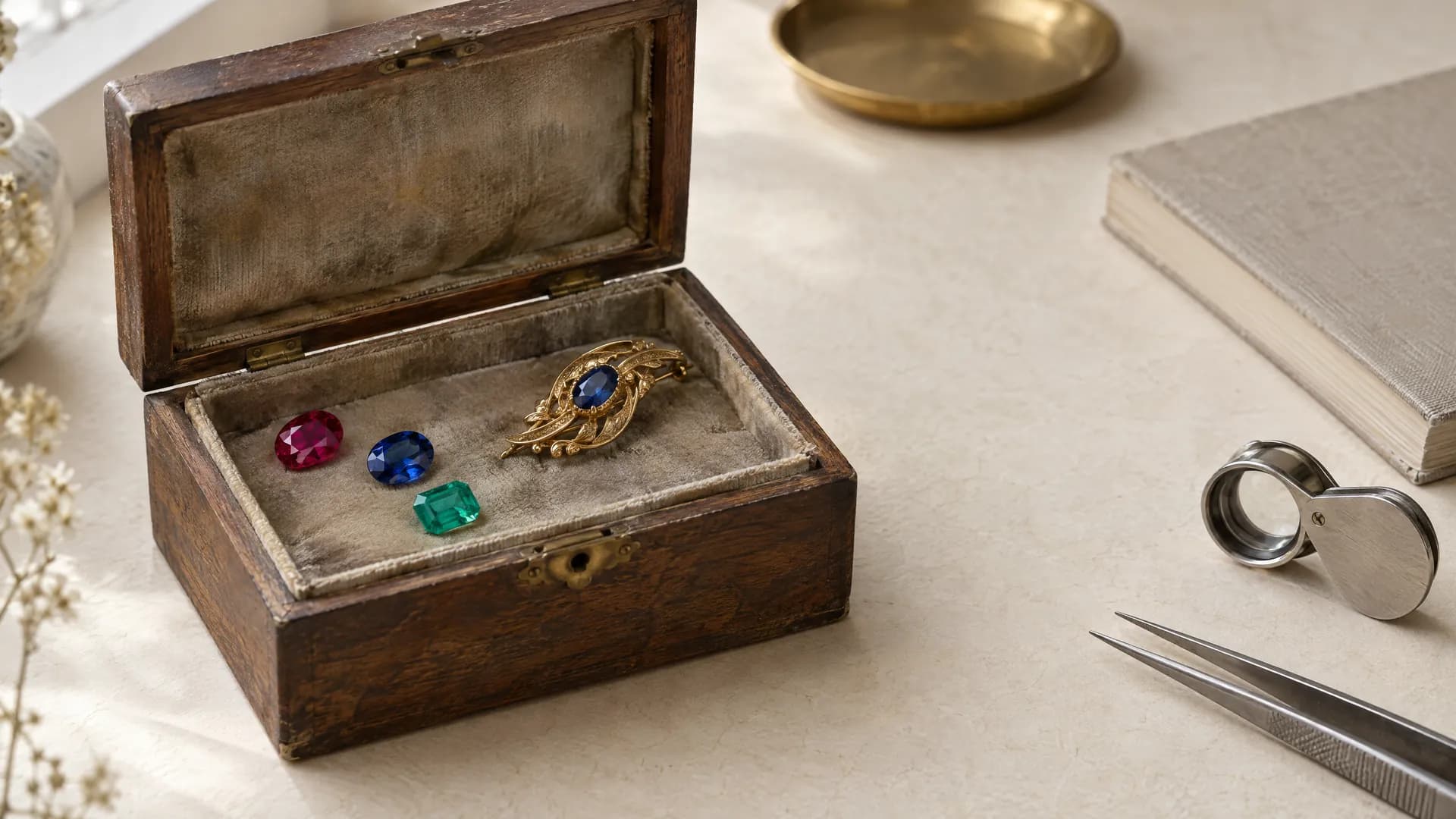
If you have inherited jewelry set with colored stones, the most useful thing to do first is very little: keep every piece together, don't clean or alter anything, and don't sell in a hurry. Then find out what the stones are, have them valued for the purpose you actually need, and decide calmly, with the family where that applies, whether to keep, insure or sell. A few weeks of patience rarely costs anything. A rushed decision often does.
In the first weeks: what not to do
- Don't clean the pieces in an ultrasonic or steam cleaner. Filled, oiled and some heat-treated stones can be damaged; GIA recommends warm, soapy water instead. Emeralds are a particular risk, because most are fracture-filled.
- Don't take stones out of their settings or send pieces for repair yet. Heat from a repair can harm some treatments, and a loose stone is easier to lose or mix up.
- Don't accept the first offer, least of all one made on the spot by the person valuing the piece.
- Don't split up sets — a pair of earrings, a suite — before they are documented. They can be worth more together.
- Check the insurance. A policy in the name of the person who died may no longer protect the pieces.
Make a record before anything else
Before any piece leaves the house, write down what there is:
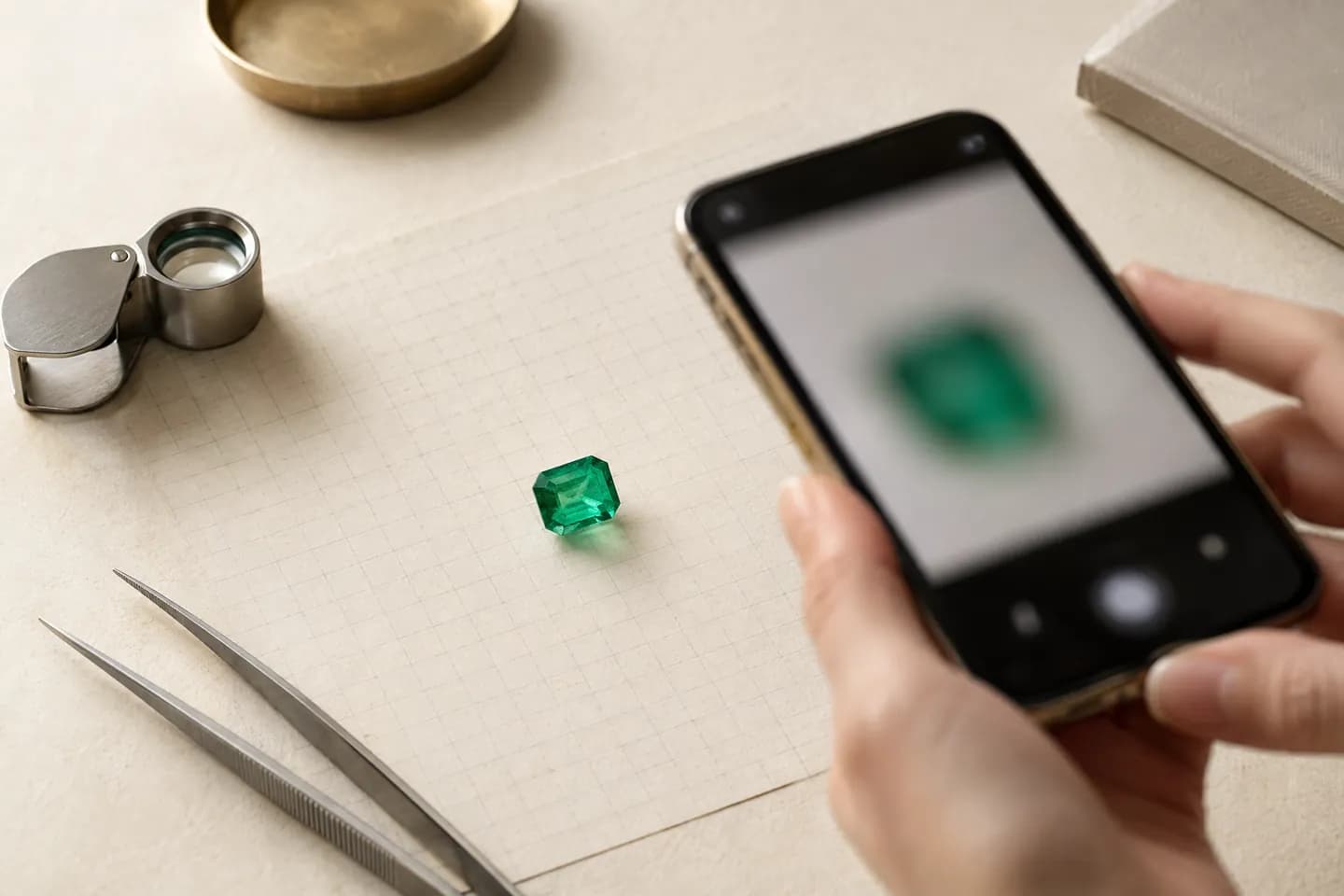
- Photograph each piece from the front, back and side, including any stamps or maker's marks.
- Give every piece a number and a one-line description.
- Gather every paper: receipts, old appraisals, lab reports, letters, even boxes and pouches with a jeweler's name on them.
- Note what the will or the estate inventory says, and who holds which piece.
 Illustration
Each kind of paper proves something different:
| Paper | What it shows | What it doesn't |
|---|---|---|
| Store receipt | what was paid, when and to whom | what the piece is worth today |
| Old appraisal | a value for a stated purpose, often insurance, on that date | a price a buyer would pay now |
| Lab report | what the lab found on the stone it tested | that this is the same stone, unless it is matched |
| Hallmark or maker's stamp | the claimed metal content and sometimes the maker | anything about the stones |
| Letters and family notes | provenance worth keeping with the piece | identity or value |
An old lab report can be the most useful paper in the box. Check its number with the issuing lab before relying on it — this is how — and remember that a report describes a stone, not necessarily the one in front of you.
Find out what the stones really are
Family stories are not evidence. "Grandmother's ruby" may be ruby, red spinel, garnet, glass or a lab-grown ruby, and age proves little: rubies have been grown in laboratories since the late 1800s. Only a lab can say what a stone is, whether it has been treated and, for some species, where it probably formed. A lab report does not give a value; that is an appraiser's job.
Lab fees are modest next to what they protect. GIA's published fee for identifying a colored stone under two carats is $75; for ruby, sapphire, emerald and a few others, the report with an origin opinion is $90, and mounted pieces are accepted (schedule effective October 1, 2026). For small stones in everyday jewelry, an appraiser's own identification may be enough. For anything that might be valuable — a large stone, a fine color, a signed piece — get the report.
Put a number on it, for the right purpose
The right valuation depends on what happens next.
- For the estate. The usual measure is fair market value at the date of death. In the US, if a federal estate tax return is filed and jewelry and similar valuables exceed $3,000 in total, an expert appraisal under oath goes with the return. The same date-of-death value generally becomes the heir's tax basis, which matters if you sell later, and gains on gems are taxed as collectibles, at up to 28%. Other countries have their own rules; ask a tax adviser where you live.
- For keeping and insuring. An insurance appraisal gives retail replacement value. GIA's appraisal guide notes that many appraisers suggest updating it every two to three years.
- For dividing among heirs. An independent fair-market appraisal gives everyone the same number to work from. Agree the method in writing before anyone chooses.
Keep, insure, store or sell
| Option | What it involves | Watch out for |
|---|---|---|
| Wear it | an insurance appraisal; a jeweler's check of prongs and settings | treated stones need gentle care |
| Keep it, unworn | secure storage and a complete record | insurance may still be needed |
| Reset or redesign | moving stones into new mounts | identify the stones first; heat and handling can damage some |
| Sell | choosing a route: dealer, auction, consignment, or a private sale with protected payment | an offer below the insurance figure is normal; know the fair market value first |
 Illustration
If you sell, compare routes on what you would receive after every fee, not on the headline price. Selling a stone you own explains how a sale with protected payment works.
When the family doesn't agree
Heirlooms carry memory as well as money, and the two can pull in different directions. A neutral record of every piece and an independent valuation won't decide who keeps grandmother's ring. They do take the guessing, and some of the suspicion, out of the conversation, and leave the personal decisions where they belong.
What Everystone does about it
Everystone doesn't appraise, and it won't rush you. It gives the family one shared, checkable record:
- A free Registry record for each stone: description and report details, on a QR page you can share with siblings, an executor or an insurer. Once a report number is confirmed with the issuing lab, the record is labeled "paper cross-checked" — a paper check, because nobody has examined the stone.
- If you decide to sell, you list the stone from your cabinet and pay the $20/month account; the desk confirms the payment and reviews the lot before it goes live, buyers pass KYC, and the money is held until the buyer confirms. While we launch there is no seller commission under $10,000; from $10,000 it is 5% of a completed sale.
- For a stone worth $30,000 or more that the family wants to keep, custody holds it in a free-zone vault in Bangkok, with insurance tied to the passport valuation and an annual valuation update.
Questions
Is inherited jewelry taxable?
It depends on the country. In the US, an heir's tax basis is generally the fair market value at the date of death, so tax arises mainly on a gain above that figure when you sell, and gems count as collectibles, taxed at up to 28%. Large estates may also owe estate tax. Ask a tax adviser where you live.
Should I sell inherited jewelry?
Only once you know what it is and what it is worth. Identify the stones, get a fair-market valuation and talk to the family; then selling, keeping or resetting is a choice rather than a guess. There is rarely a reason to decide in the first weeks.
How do I get inherited jewelry appraised?
Have any valuable stones identified by an independent lab first, then hire an independent appraiser, someone who isn't buying, for the purpose you need: fair market value for the estate or a family division, replacement value for insurance. Agree a flat or hourly fee in writing.
Where can I sell inherited jewelry?
To a dealer or jeweler, a cash buyer, on consignment, at auction, or privately through a platform that holds the payment until the buyer confirms. The routes differ in speed and in how much of the price reaches you, so compare written offers on what you would receive after every fee.
How can I tell if an inherited stone is real?
Not reliably at home. Old jewelry can hold glass, garnet, spinel or lab-grown stones; lab-grown ruby dates back to the late 1800s. A report from a gem lab is the way to know.
Sources
- GIA 4Cs — Gems and Ultrasonic Cleaners
- IRS — Publication 551, Basis of Assets
- IRS — Topic no. 409, Capital gains and losses
- IRS — Publication 550 (collectibles gain includes gems)
- GIA 4Cs — Tips on Getting a Jewelry Appraisal
- 26 CFR 20.2031-6 — Valuation of household and personal effects
- GIA — Colored Stone Services fee schedule (effective October 1, 2026)