

Is my emerald real? Imitations, synthetics, fillers — and what only a lab can tell
Is my emerald real? What you can check yourself, why synthetics and oiled or resin-filled stones beat simple tests, and which lab report settles it.
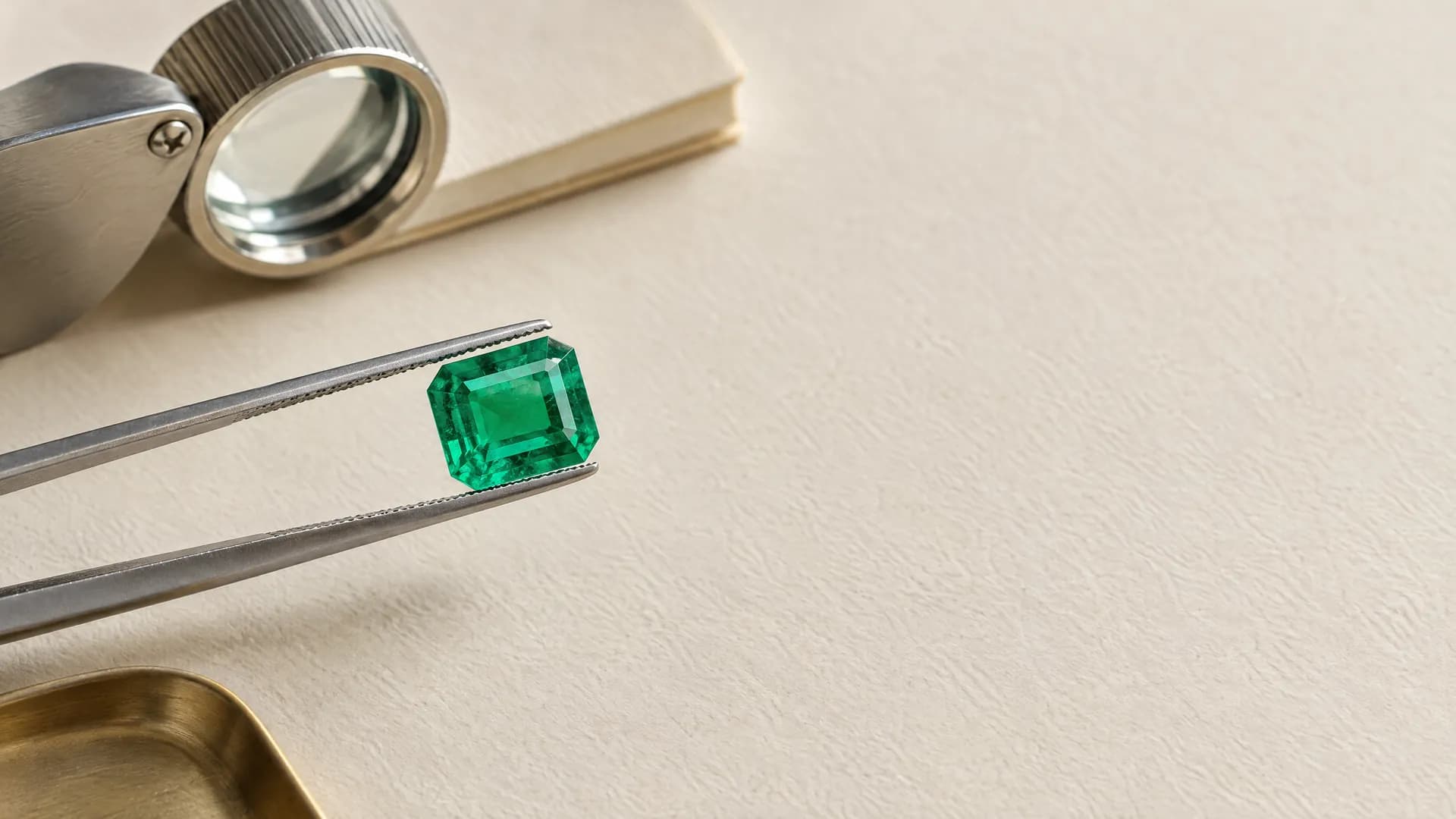 Illustration
You can't confirm an emerald at home. A loupe, a refractometer and a look from the side can rule out glass and many assembled fakes, but synthetic emerald shares natural emerald's properties, and most emeralds carry oil or resin in their fissures — which only a lab can identify and measure. If the stone matters, get an identification report that says natural or synthetic and how much filler, and check it with the lab that issued it.
Five ways an "emerald" can disappoint
| What it is | Is it emerald? | Typical giveaway |
|---|---|---|
| Glass or another green stone | No | Refractometer reading, bubbles |
| Doublet or triplet | No, or only partly | Colour sits in one layer; a join line; flat bubbles in the glue |
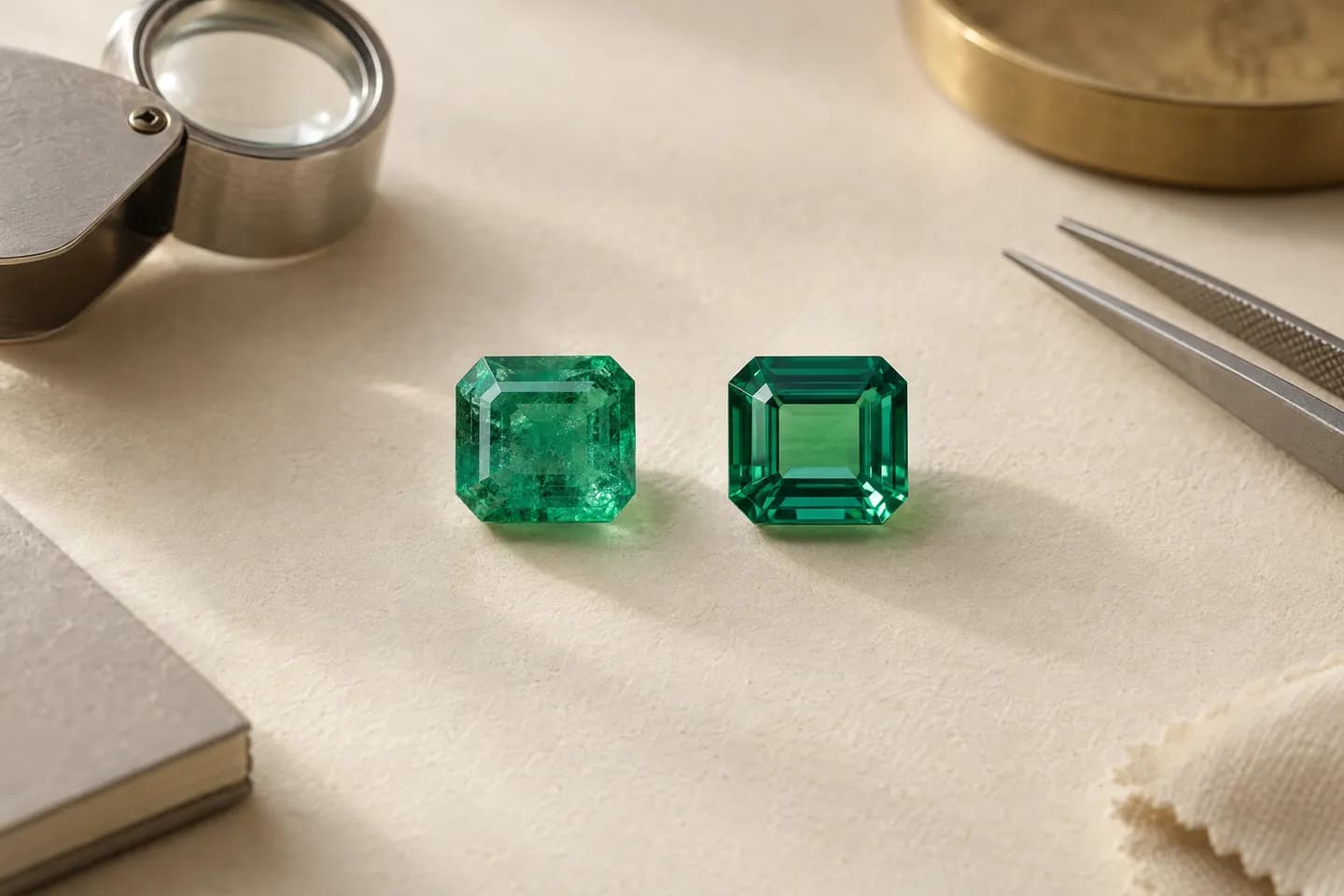
| Synthetic (lab-grown) emerald | Same mineral, not natural | Often only a lab |
| Heavily filled emerald | Yes, treated | Flashes in fissures; the extent needs a lab |
| Green beryl | Same mineral family, not emerald | A lab decision on colour and its cause |
Two of these need a word.
Synthetics are old news. GIA dates commercially viable flux-grown emerald to the late 1930s and hydrothermal synthetic emerald to 1960. They are usually sold as "created", often with the maker's name attached. Sold that way, they are honest. Sold as natural, they are among the hardest fakes to catch without a lab.
Green beryl is real beryl, but not emerald. Under the shared definition used by the LMHC labs, emerald is beryl coloured mainly by chromium and/or vanadium, with medium to strong green saturation; an iron-rich beryl with only traces of chromium is green beryl. GIA notes that labs and dealers still differ on where "too light" begins — another reason the word on the report matters.
Home checks and their limits
- Inclusions. Natural emeralds almost always have them; the trade calls them the jardin. GIA's buying advice treats a well-priced emerald that looks flawless as suspect. But synthetics can show inclusions of their own, so inclusions alone prove nothing.
- Look from the side. Old-style assembled emeralds join two colourless pieces with green glue. The colour sits in a thin layer, and the glue can trap flat bubbles. Garnet-topped doublets are another old trick; with the stone face-down on white paper, a thin red ring near the edge gives them away.
- The Chelsea filter. Many chromium-coloured emeralds look red or pink through it. So can synthetics and some other green stones, such as green garnets, and some natural emeralds stay green. It is a hint, never an answer.
- The price and the story. A large, clean, vivid emerald at a bargain price is a reason to stop.
 Illustration
What not to do: ultrasonic or steam cleaners, alcohol, solvents or heat. GIA warns that fillers can be removed or altered by ultrasonic cleaning, alcohol and even jewellery repair. A "test" that strips the oil changes the stone and answers nothing.
What a loupe and a refractometer show
With a 10× loupe and good light:
- Three-phase inclusions — a cavity holding liquid, a gas bubble and a tiny crystal — are typical of Colombian emeralds and a good sign of a natural stone.
- A flash of colour and flattened bubbles in fissures point to a filler.
- Unusual crystals or wavy growth patterns can mark a synthetic, but they are usually a microscope job.
- Round gas bubbles in an otherwise clean stone point to glass.
With a refractometer, most emeralds read about 1.577–1.583, with a birefringence of 0.005–0.009. Glass gives a single reading. Synthetic emeralds fall in or near the same range, so a normal reading does not prove a natural stone. Like a loupe, a refractometer can rule a stone out; it cannot rule one in.
Fillers: what the report line means
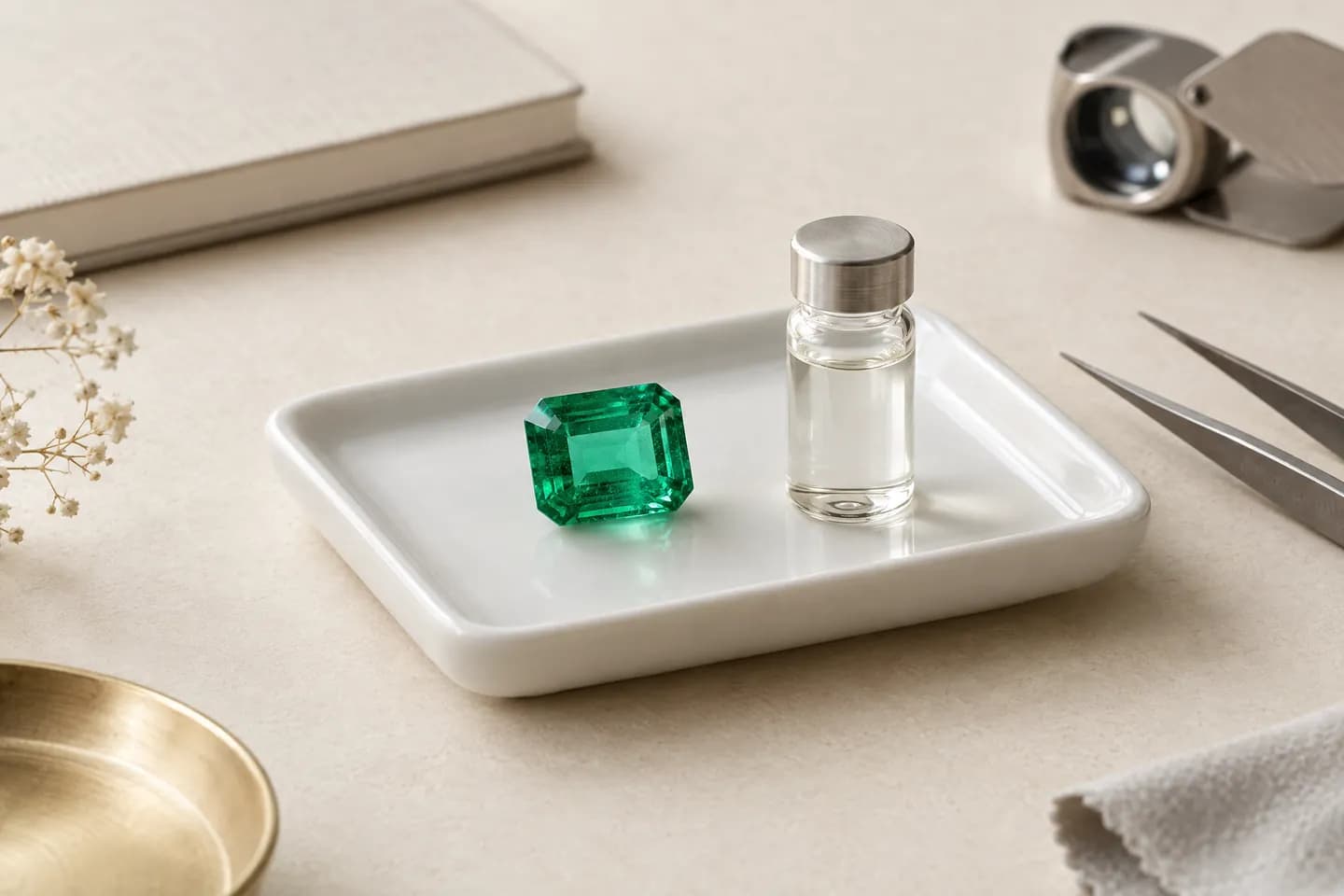
Filling fissures with oil, wax or resin is accepted in the trade, but it must be disclosed, and the amount affects value. Labs that follow the LMHC wording use one scale:
| Report wording | What it means |
|---|---|
| No indications of clarity enhancement | No filler found at the time of testing |
| Minor (F1) | Only a slight effect on the face-up appearance |
| Moderate (F2) | Between minor and significant; GIA defines only the two ends of the scale |
| Significant (F3) | An obvious effect on the appearance |
 Illustration
Some reports also name the filler. SSEF names the filler and its amount whenever it reports one; insignificant traces are left off its reports. GIA introduced filler identification as an option in December 2024, splitting fillers into oil, wax or natural resin (Type A) and artificial resin (Type B). A coloured filler is a different matter: it changes colour as well as clarity, and harmonised wording treats it as colour modification that must be declared.
One more caution. In June 2026 SSEF warned that some emeralds are being cleaned, tested with little or no filler, then re-filled and sold with the old report. A report states the condition at the time of testing — nothing later. If an emerald looks unusually clean for what its report says, or the report is not recent, ask for a re-test before you pay.
Which report to ask for
For an emerald that matters, ask for an identification report from an established gem lab that states:
- 1.natural emerald (beryl), not synthetic;
- 2.the degree of clarity enhancement — and the filler type, if that matters to you;
- 3.the country of origin, if the price depends on it.
Check the report on the issuing lab's own website, compare the weight and measurements with the stone, and look at the date. More on why a scan alone proves little in cross-checking a lab report.
What Everystone does about it
A free Registry record keeps an emerald's details and its report number in one place you can show a buyer. The record also notes when that report number has been confirmed with the lab that issued it. Matching the report to the physical stone is what an Everystone Passport adds: the report describes a stone, the passport shows it is this one. In the shop, every lot says how far it has been checked, from seller-declared to full verification, and your payment is held until you confirm the stone. More on buying safely.
Questions
How can I tell if an emerald is real at home?
You can rule out some fakes, but you can't confirm an emerald at home. A look from the side can reveal a doublet or triplet, a loupe can show bubbles typical of glass, and a too-perfect stone at a low price is a warning sign. Natural versus synthetic, and how much filler the stone holds, need a gem lab.
Are all emeralds oiled?
Not all, but most. Emeralds usually have fissures, and filling them with oil or resin to make them less visible is an accepted practice that must be disclosed. High-quality emeralds with no clarity enhancement are rare, and a lab report says which kind you have.
Is a lab-created emerald a real emerald?
It is real beryl grown in a laboratory, with essentially the same properties as natural emerald. Flux-grown synthetics have been made since the late 1930s and hydrothermal ones since 1960. They are not natural, must be sold as synthetic, lab-grown or created, and a lab report states which one you have.
What does 'minor oil' mean on an emerald report?
It means the lab found a small amount of filler in the fissures, with only a slight effect on how the stone looks face-up. The usual scale runs minor, moderate, significant; some labs also name the filler, such as oil or artificial resin. The finding describes the stone at the time of testing, and filler can be added or removed later.
Do real emeralds have inclusions?
Almost always. Inclusions are so typical that the trade calls them the jardin, or garden. A cheap emerald that looks flawless is more likely synthetic or an imitation, though synthetics can have inclusions too.