

Natural vs lab-created ruby
What a lab-grown ruby is, how it is made, what it is worth, and how a gem lab separates a lab-created ruby from a natural one.
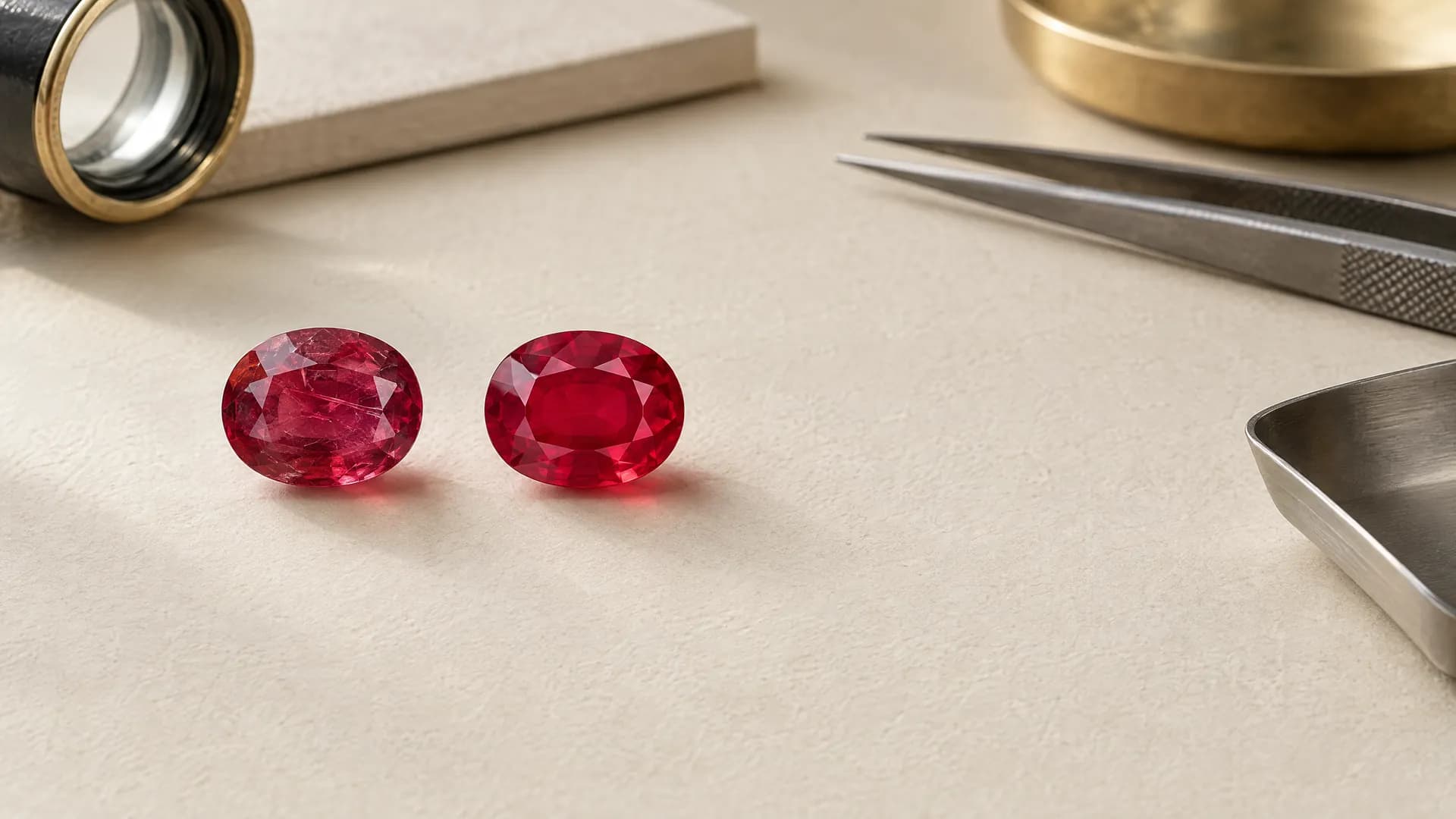 Illustration
A lab-grown ruby is real ruby, red corundum colored by chromium, that was grown in a factory rather than formed in the earth. Ruby was the first gem ever produced commercially in a lab, more than a century ago, so lab rubies are common, including in old jewelry. They cost a small fraction of a natural ruby with the same look, and only a gem lab can separate the two with confidence.
What "lab-grown ruby" means, and what it doesn't
- Lab-grown, lab-created and synthetic, or a manufacturer's name followed by "created", all mean the same thing: corundum made in a lab, with the chemistry, hardness and optics of natural ruby.
- Imitations only look like ruby. Red glass is the classic example, and it fails basic tests that a synthetic passes.
- Glass-filled ruby is neither. It is natural corundum, usually low in quality and heavily fractured, with lead glass filling the cracks. When the glass holds the stone together, labs describe the result as a corundum and glass composite, a manufactured product. It is unstable to heat and to some chemicals, and it must be sold as what it is.
That last category matters more than its name suggests. Lead-glass filling spread through the market in the early 2000s, and GIA counts it among the most widespread and troublesome treatments the trade has seen.
How lab rubies are made
The first commercial method is still the cheapest. In flame fusion, announced by Auguste Verneuil in 1902, powdered ingredients are dropped through a flame and build up into a crystal. By the early 1900s, more than five million carats of flame-fusion ruby were being produced every year.
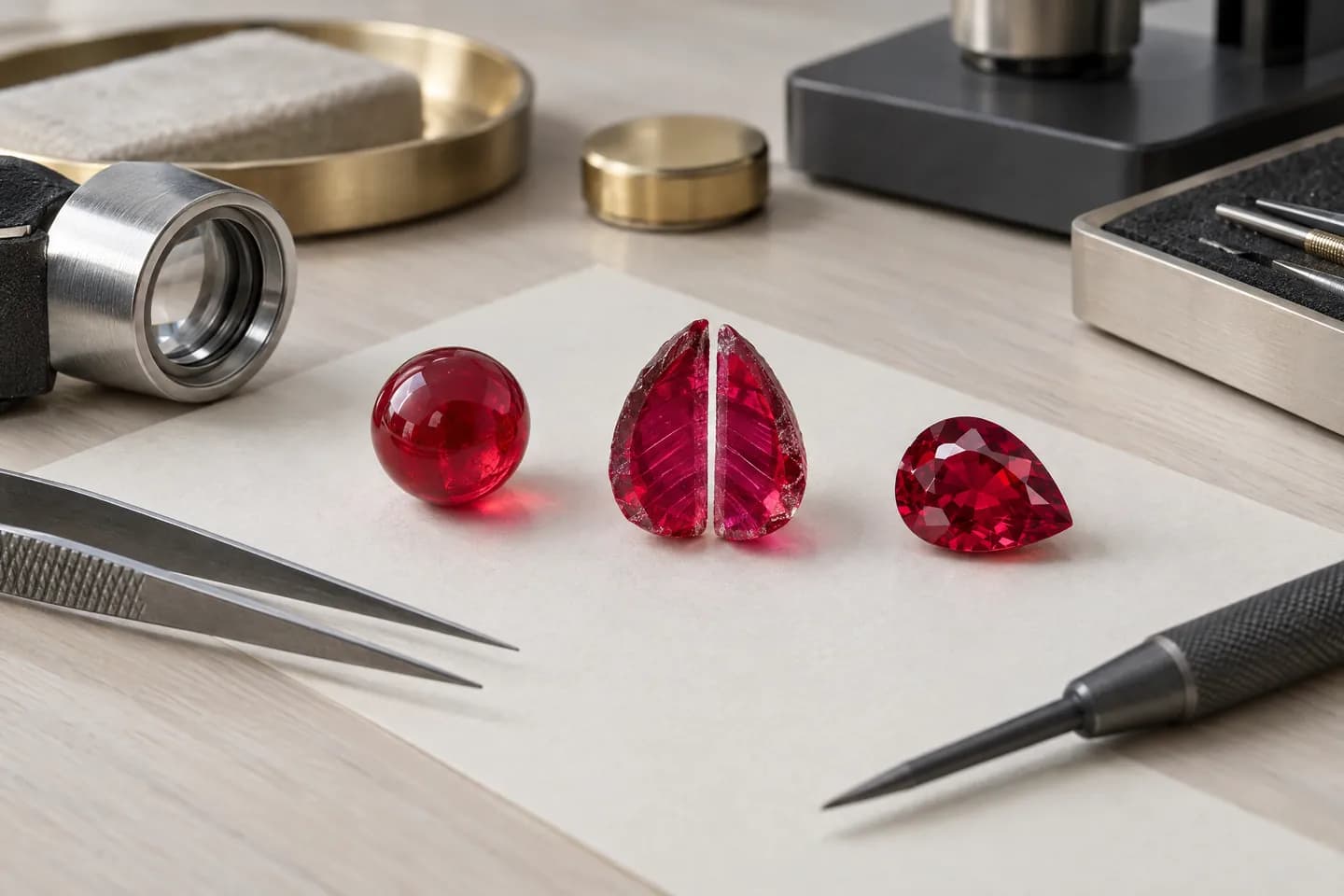 Illustration
Two slower methods produce more convincing stones. Flux growth dissolves the ingredients in a molten flux that crystallizes over months as it cools. Hydrothermal growth builds the crystal on a seed from a hot, pressurized water solution. Both need time and expensive equipment, which shows in the price, though it stays far below that of a comparable natural ruby.
How a lab tells natural from lab-grown
The basic tests do not settle it. When GIA examined a flame-fusion lab ruby in 2023, its refractive index, its spectrum and its fluorescence were all consistent with ruby. That is the point: a synthetic is ruby.
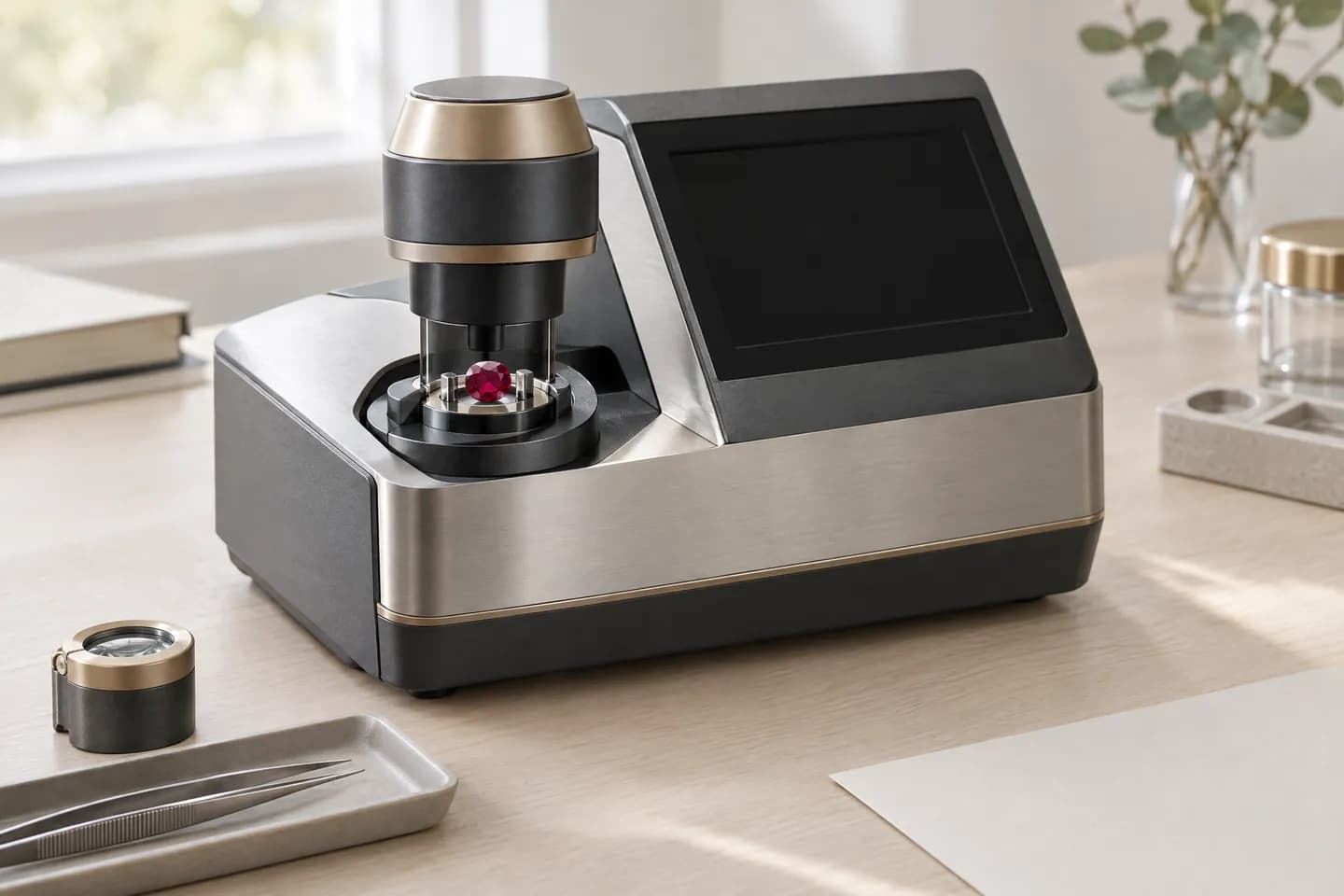 Illustration
A red glow under an ultraviolet lamp proves nothing either. Fine natural rubies, especially those from marble deposits in Myanmar, are prized for strong red fluorescence, and synthetics fluoresce too.
What separates them is what each process leaves inside the stone.
| Growth | Telltale features |
|---|---|
| Natural | Mineral crystals, rutile silk, fingerprint-like healed fractures, straight and angular growth zoning |
| Flame fusion | Curved growth lines (striae) and gas bubbles |
| Flux | Flux residues, often aligned with the crystal structure; metallic platelets from the crucible |
| Hydrothermal | Chevron-shaped growth graining |
Reading those features takes experience. A heated natural ruby can contain flux residues from the healing of its fractures, which is not the same as being flux-grown but is easy to misread. Some synthetics carry inclusions that look natural. And labs have examined natural corundum with a thin layer of synthetic ruby grown over it, where nearly all the red sat in the synthetic skin. For anything that matters, the answer belongs on a lab report, not in a seller's description.
Natural and lab-grown ruby at a glance
| Natural ruby | Lab-grown ruby | |
|---|---|---|
| What it is | Corundum colored by chromium | The same corundum, colored the same way |
| Where it formed | In the earth, in marble or in iron-rich rocks | In a lab: quickly by flame fusion, over months by flux or hydrothermal growth |
| Inside | Mineral crystals, silk, healed fractures, angular zoning | Curved lines and bubbles, flux residues, or chevron graining, depending on the method |
| What sets the price | Scarcity: color, clarity, size, origin | The cost of growing, cutting and selling it |
| On a lab report | Natural ruby, with any treatment and, if requested, an origin opinion | Identified as synthetic or laboratory-grown |
What a lab-grown ruby is worth
Fine natural ruby can fetch more per carat than any other colored gemstone, and its price per carat climbs steeply with color, clarity and size. A lab-grown ruby has none of that scarcity, since it can be grown to order. Flame-fusion stones are inexpensive; flux-grown and hydrothermal stones cost more, but still a small fraction of a natural ruby that looks the same.
That makes a lab ruby a sensible choice for a bright, durable red at a modest price. It is not a store of value, and nothing here is investment advice.
One more caution for anyone buying estate jewelry: because lab rubies have been made in quantity since the early 1900s, an antique setting does not make a ruby natural.
Disclosure and the words to watch
A seller must say plainly when a ruby is lab-grown. In the United States, the FTC's Jewelry Guides call for a qualifier such as "laboratory-created" or "laboratory-grown", as conspicuous as the word ruby itself. "Cultured ruby" is acceptable only with a clear statement that the stone is not mined, and products made with lead glass must be described for what they are. Trade bodies set similar rules for their members.
Words that should make you ask more questions:
- "created", "lab" or "cultured" in small print, or missing from the receipt;
- a color named after a place, such as "Burma red", used as if it were an origin;
- a trade color term such as "pigeon's blood" with no lab report behind it;
- "natural ruby" on a stone sold far below natural-ruby prices, which may be glass-filled or lab-grown.
And four questions worth asking any seller before you pay:
- 1.Is this ruby natural or lab-grown, and will you write that on the receipt?
- 2.Has it been heated, and is there any glass in its fractures?
- 3.Is there a report from an independent lab, and can I check its number with that lab?
- 4.Can I have it tested independently before the payment reaches you?
A seller who knows the stone can answer all four.
What Everystone does about it
Each lot in the shop says how far it has been checked, from seller-declared to full verification. Where a report has been cross-checked, its number has been confirmed against the issuing lab's records; full verification adds a hands-on check that the report belongs to this stone. Your money is held until you confirm the stone, and the inspection window lets you arrange an independent check first.
Already own a ruby with a report? The free Registry records it; once the report number is confirmed with the issuing lab, the record says so — as a paper check, nothing more. To check a report yourself, start with how to cross-check a lab report.
Questions
Is a lab-grown ruby a real ruby?
In substance, yes: it is corundum colored by chromium, with the same chemistry, hardness and optics as a mined ruby. It differs in origin and in price, and it must be sold with a qualifier such as 'lab-grown', 'lab-created' or 'synthetic'.
How can you tell a lab-created ruby from a natural one?
Not reliably at home. A gem lab looks for growth features, such as curved lines and gas bubbles in flame-fusion stones, flux residues in flux-grown ones and chevron graining in hydrothermal ones, and for the inclusions and chemistry of mined ruby. For a valuable stone, rely on a report from an independent lab.
Is a glass-filled ruby the same as a lab-grown ruby?
No. A glass-filled ruby is natural corundum, usually heavily fractured, with lead glass filling the cracks; where the glass holds the stone together, labs call it a manufactured product. The glass can be damaged by heat and some chemicals, so it is less durable than either a natural or a lab-grown ruby, and it must be disclosed.
Do lab-grown rubies glow under UV light?
Many do, and so do many natural rubies; fine rubies from Myanmar's marble deposits are known for strong red fluorescence. A glow under a UV torch tells you nothing about whether a ruby is natural or lab-grown.
Are lab-grown rubies worth anything?
They are worth a modest amount: roughly what it costs to grow, cut and sell them, which is a small fraction of a comparable natural ruby. Buy one because you like how it looks and wears, not to hold value.
Sources
- GIA — An Introduction to Synthetic Gem Materials
- GIA Gems & Gemology — Chart: Inclusions in Natural, Synthetic, and Treated Ruby
- GIA Gems & Gemology — Unusual Solid Inclusions in Flame-Fusion Ruby (2023)
- LMHC — Gemstone information sheets (glass-filled corundum wording)
- U.S. Federal Trade Commission — Jewelry Guides (16 CFR Part 23)


