Spinel price per carat: what Bangkok catalogues ask, and what moves it
What red and pink spinels ask per carat in two Bangkok dealers' public catalogues in October 2026, and what moves a spinel's price: colour, size, paper.
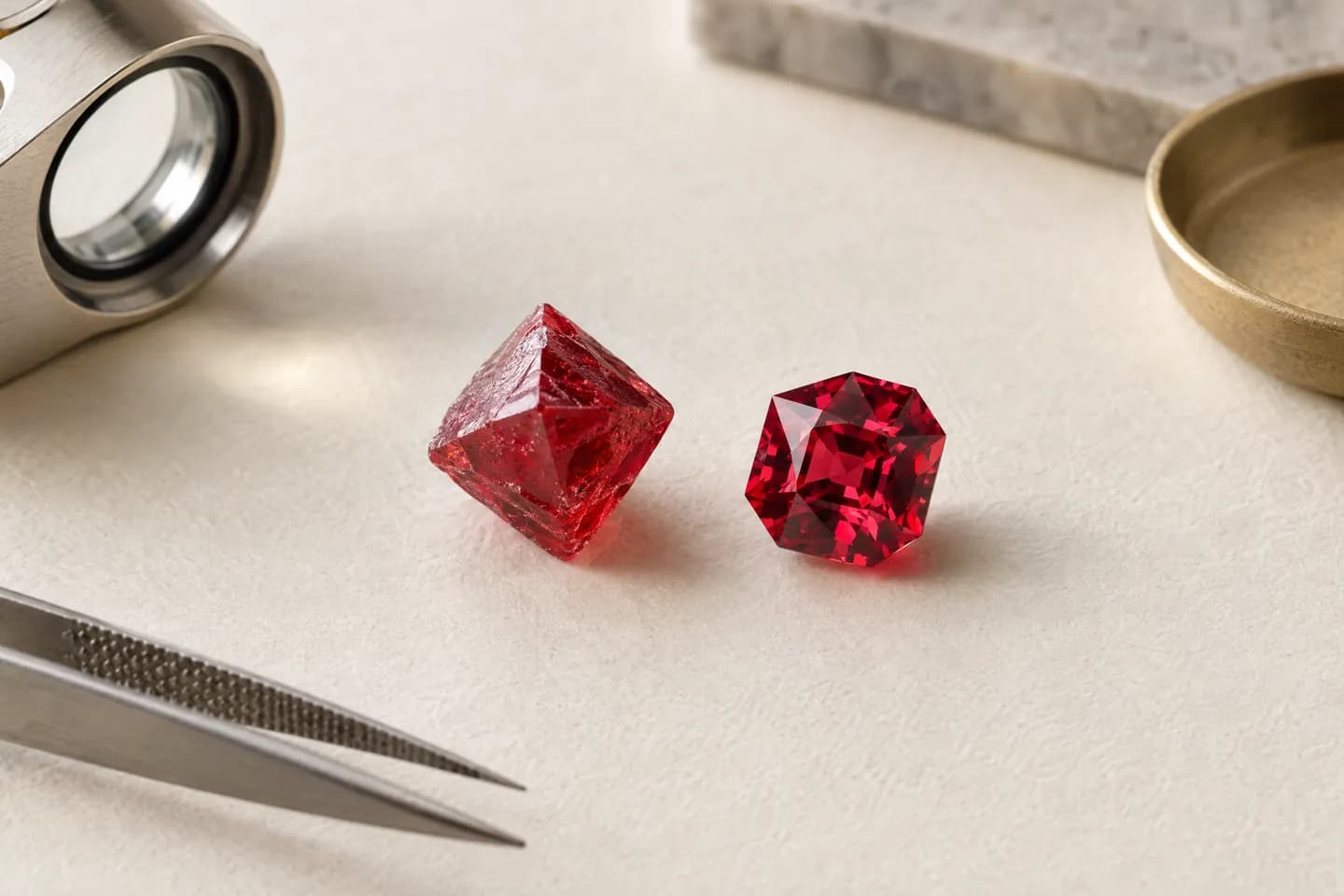
 Illustration
On 1 October 2026, 56 spinels in the public catalogues of two Bangkok dealers asked a median of $1,510 per carat. Red spinels asked $2,290 (n = 16) and pink ones $1,220 (n = 25). It is a small sample from two catalogues, one of which supplies two thirds of the stones, so read it as a snapshot rather than a price list.
Spinel asking price per carat by colour
| Colour as listed | Spinels (n) | Median $/ct | Middle half $/ct | Lowest–highest $/ct | Dealers |
|---|---|---|---|---|---|
| All colours | 56 | $1,510 | $980–2,550 | $340–6,610 | 2 |
| Red | 16 | $2,290 | $1,840–2,740 | $360–2,970 | 2 |
| Pink | 25 | $1,220 | $920–1,730 | $600–6,610 | 2 · one >70 % |
| Blue | 5 | too few to show | |||
| Grey, purple, violet | 10 | too few to show |
 Illustration
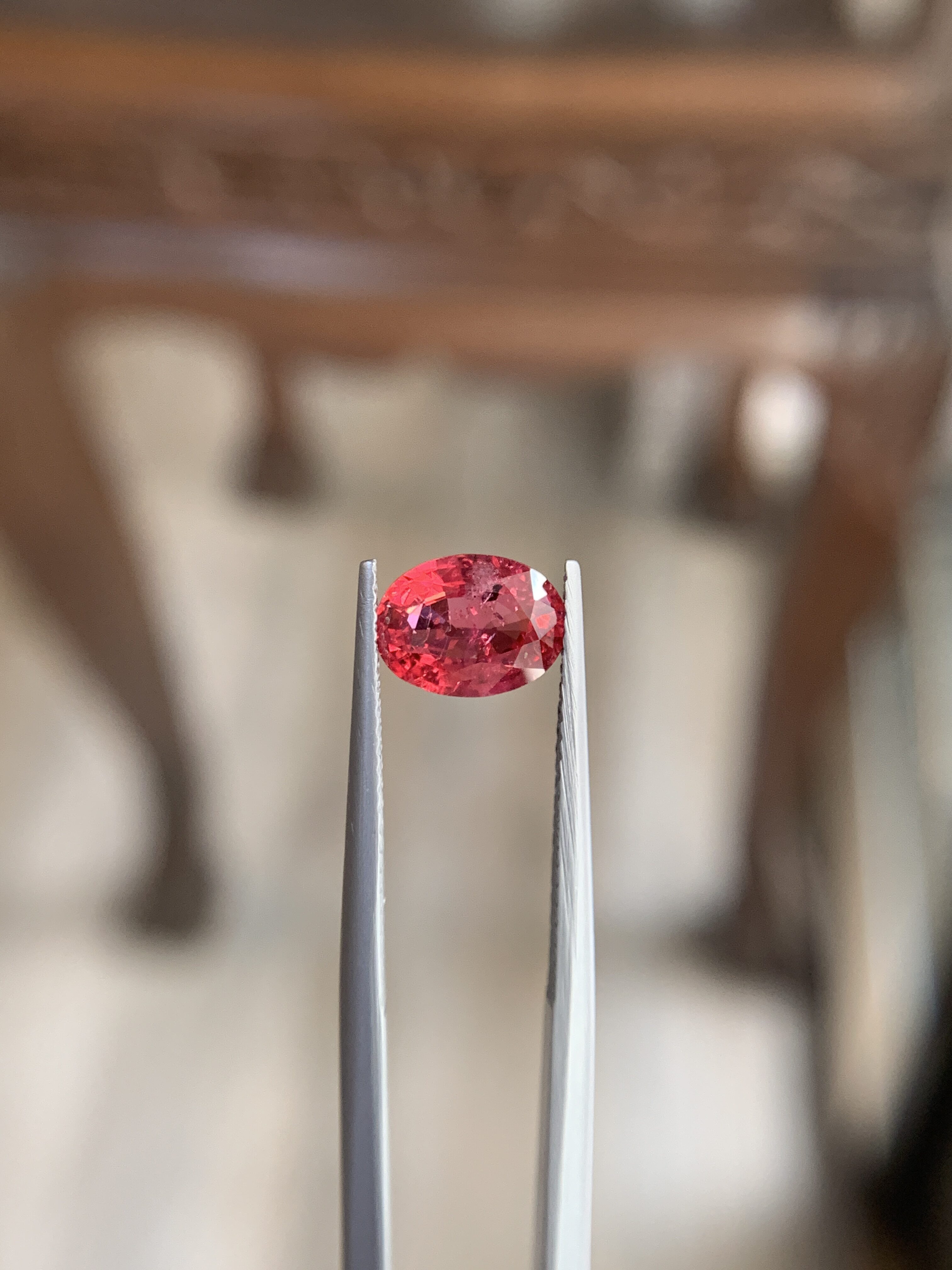
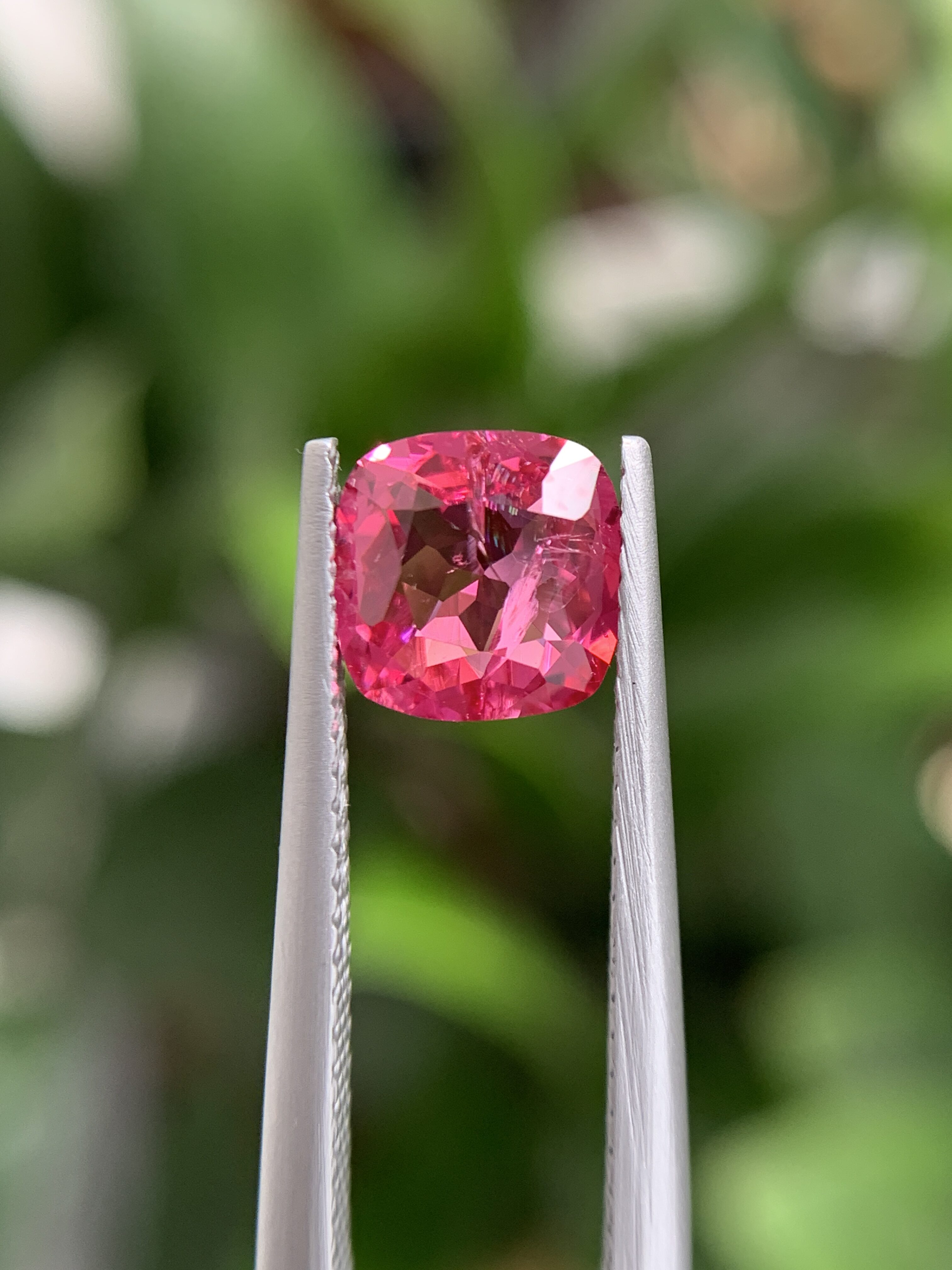
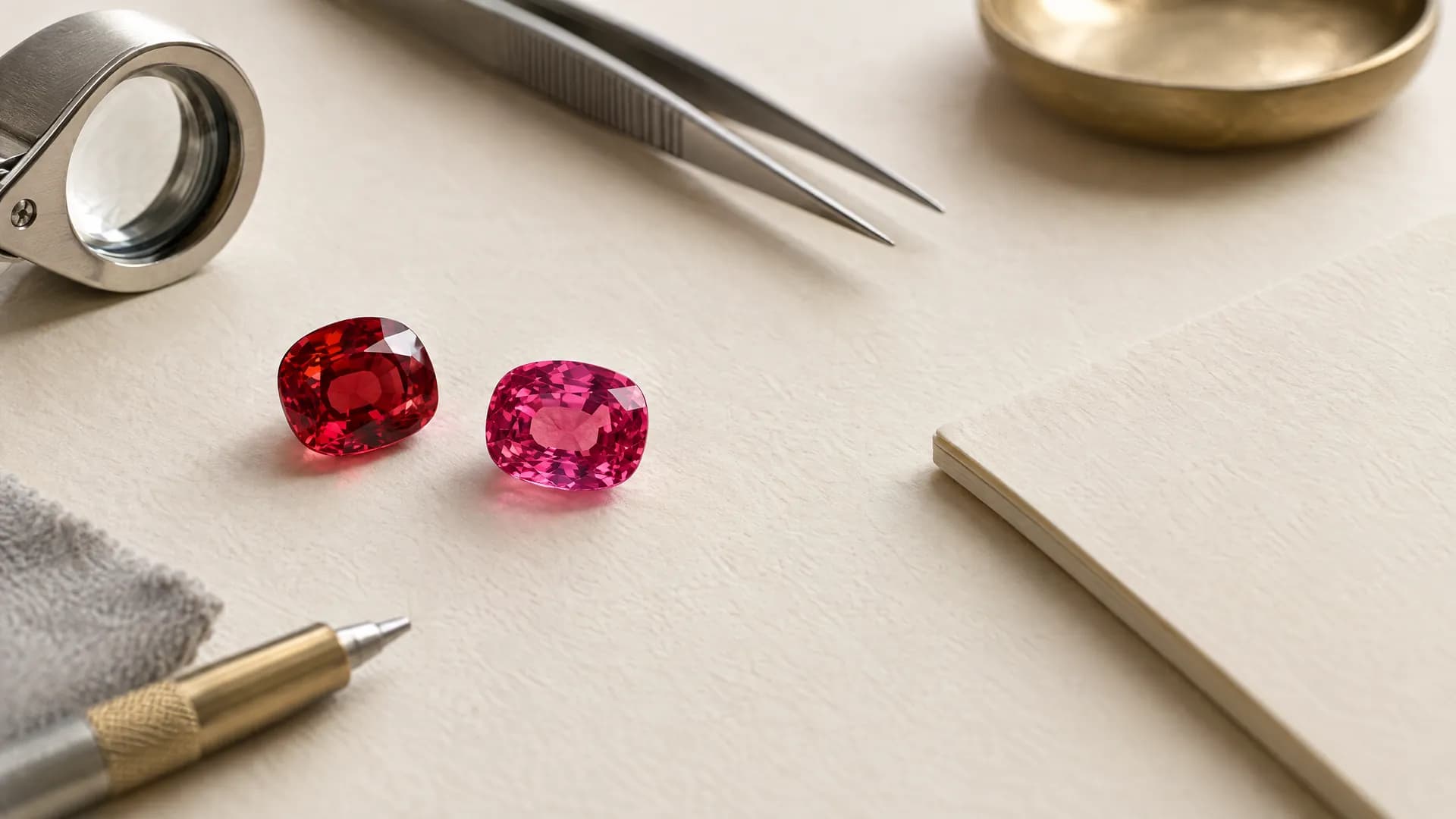
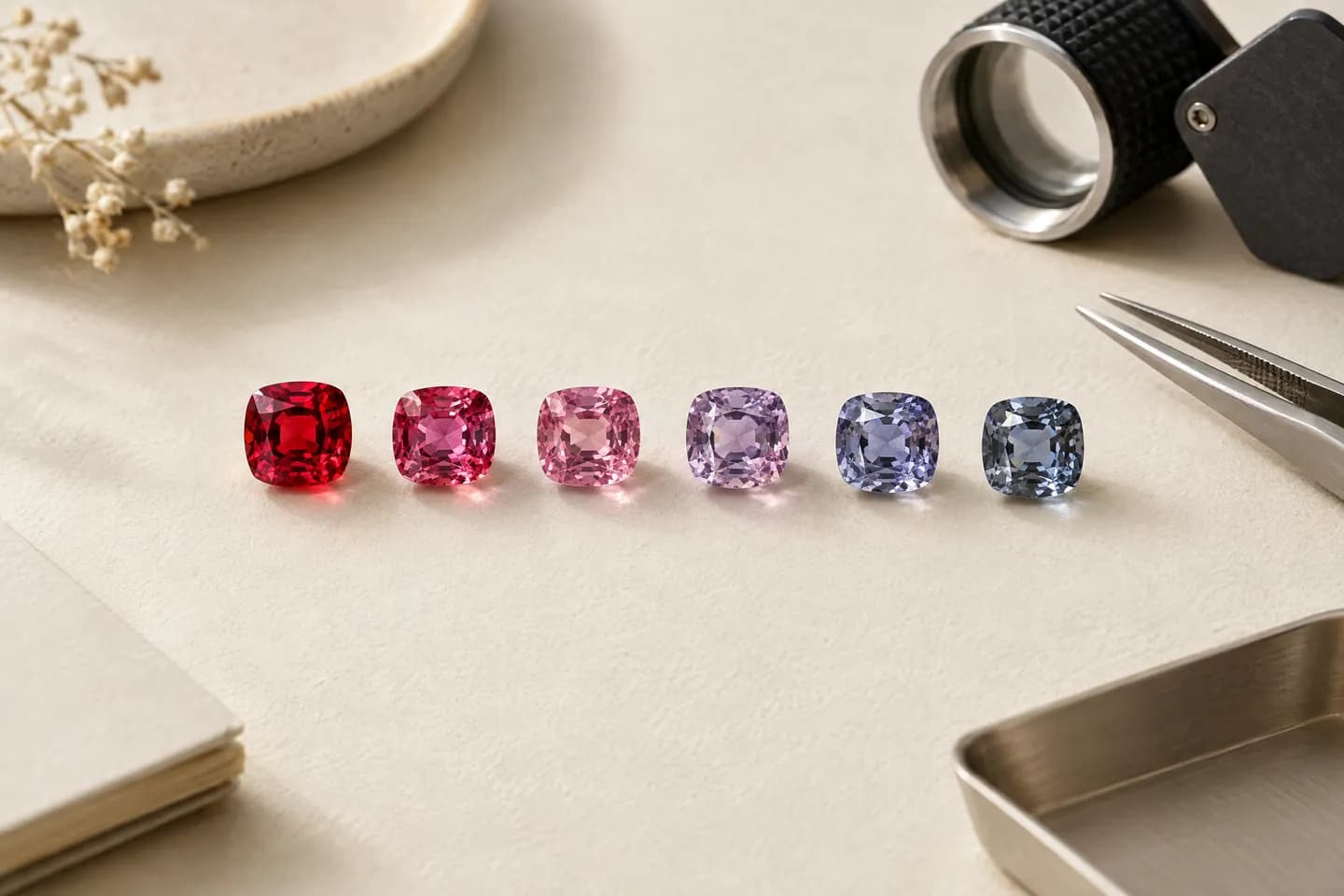
Red asks more than pink, as GIA would lead you to expect: it describes vivid reds and cobalt blues as the most valued spinel colours, red and pink as the most important commercially, and pale colours as cheaper than vivid ones. Inside each colour the spread is still wide; pink spinels ran from $600 to $6,610 per carat, a factor of eleven.
"Cobalt" is a name with a definition. Our five blue spinels are too few to price, and none was listed as cobalt. Since May 2025 the labs of the LMHC, a committee of seven labs including GIA, have shared a definition of cobalt spinel: a blue spinel whose colour comes mainly from cobalt. Cobalt sits there in traces that only lab instruments measure; a blue spinel coloured mainly by iron, usually greyish or slightly greenish blue, does not qualify, and neither does colour added by cobalt diffusion or cobalt glass. If a price assumes cobalt, the report should say so.
By size
| Size | Spinels (n) | Median $/ct | Middle half $/ct | Lowest–highest $/ct | Dealers |
|---|---|---|---|---|---|
| under 1 ct | 6 | too few to show | |||
| 1–2 ct | 14 | too few to show | |||
| 2–3 ct | 12 | too few to show | |||
| 3–5 ct | 16 | $1,530 | $870–2,210 | $340–3,010 | 2 · one >70 % |
| 5–10 ct | 8 | too few to show |
Only the 3–5 ct band holds enough stones to show, and within it the asks run from $340 to $3,010 per carat: colour moves a spinel's price more than a carat does. Large fine stones are scarce; GIA notes that spinel is rare above five carats today.
By declared origin
| Declared origin | Spinels (n) | Median $/ct | Middle half $/ct | Lowest–highest $/ct | Dealers |
|---|---|---|---|---|---|
| Burma (Myanmar), all colours | 22 | $1,330 | $510–2,300 | $340–2,890 | 2 |
| Tanzania, all colours | 27 | $1,500 | $960–2,650 | $360–6,610 | 2 · one >70 % |
| Tanzania, pink | 18 | $1,250 | $920–1,790 | $620–6,610 | 2 |
 Illustration
Burmese spinels as a group asked less than Tanzanian ones because eight of the ten grey, purple and violet stones are Burmese; the comparison says more about colour than about the country. Sri Lanka (2) and spinels with no stated origin (5) are too few to show.
Treatment, and natural or not
55 of the 56 spinels were declared unheated, which matches GIA's note that spinel is rarely treated. A declaration is not a test: only 12 of the 56 listings name a lab report. Spinel is also grown in laboratories, so for a significant purchase GIA advises a report from an independent lab confirming that the stone is natural. Here is how to check a lab report.
What moves the price of a spinel
- Colour first: hue, and how vivid it is. Red and cobalt blue at the top, pink next, grey and pale violet at the bottom.
- Size: fine spinels above five carats are rare; our data has too few of them to show what they ask.
- Clarity: pastel spinels are expected to be clean, while some inclusions are accepted in saturated reds and blues because those are rare.
- Cut: spinel is usually cut as a cushion or oval, and a good cut makes a visible difference to brightness.
- Paper: a report confirming natural spinel, and for blue stones whether the colour is due to cobalt.
Why an asking price is not a sale price
An asking price is the seller's opening number. What a stone actually sells for depends on the buyer, the payment, the size of the deal and how long the dealer has held it. In the same import, nine sapphires were listed two or three times in one dealer's catalogue at two prices, one exactly 20 % above the other: same stone, same day. With 56 spinels from two catalogues, one more catalogue could move these medians.
How to get a fair price
- 1.Compare like with like: the same colour, size band and origin, and a similar level of paperwork.
- 2.Ask for the report and its number, and check the number with the lab that issued it.
- 3.Have the stone checked against the report before you pay: weight, measurements, colour, natural or synthetic.
- 4.Get the full price in writing, with every fee, insured shipping and the import duties in your country.
- 5.Make a protected payment, so the seller is paid only after the stone has been checked and you have confirmed.
These figures describe asking prices on one date. They are not a forecast, they say nothing about what a spinel will be worth later, and they are not investment advice.
What Everystone does about it
- Every lot in the shop states how far it has been checked, from Seller-declared to Full verification, with treatment and origin as stated.
- After you pay, the seller confirms the stone within 48 hours (our team takes up to 48 more); if it can't be confirmed, your payment comes back in full. Once you have the stone, you have 48 hours to check it, and you can add an independent lab check when you buy.
- Every purchase is a protected payment, and your money is held until you confirm. Every fee is on the pricing page.
- Already own a spinel? A free Registry record keeps its report details with the stone's record. Selling one: see how selling works.
Questions
What does a red spinel cost per carat?
Red spinels asked a median of $2,290 per carat in our October 2026 data (n = 16), with the middle half between $1,840 and $2,740. They were small stones, around one carat at the median, and single asks ran from $360 to $2,970 per carat, so the quality of the red matters far more than the word.
How much is a cobalt spinel per carat?
We can't say from this data: there were only five blue spinels, and none was listed as cobalt. The name has a lab definition shared by seven major labs: a blue spinel whose colour comes mainly from cobalt, which only lab measurement can show. Ask for a report that uses the term before paying for it.
Is spinel treated?
Rarely, according to GIA, and 55 of the 56 spinels in our data were declared unheated. A declaration is not a test, though: only 12 of the 56 listings named a lab report.
Is spinel cheaper than ruby?
We can't compare fairly from this data: almost all our rubies come from one dealer's list. Spinels asked a median of $1,510 per carat (n = 56), at a median weight of 2.4 ct; a fine red spinel is a rare gem in its own right.