

Natural vs lab-created sapphire
Natural vs synthetic sapphire: how lab-created sapphires are made, what they are worth, and how a gem lab separates them from natural stones.
 Illustration
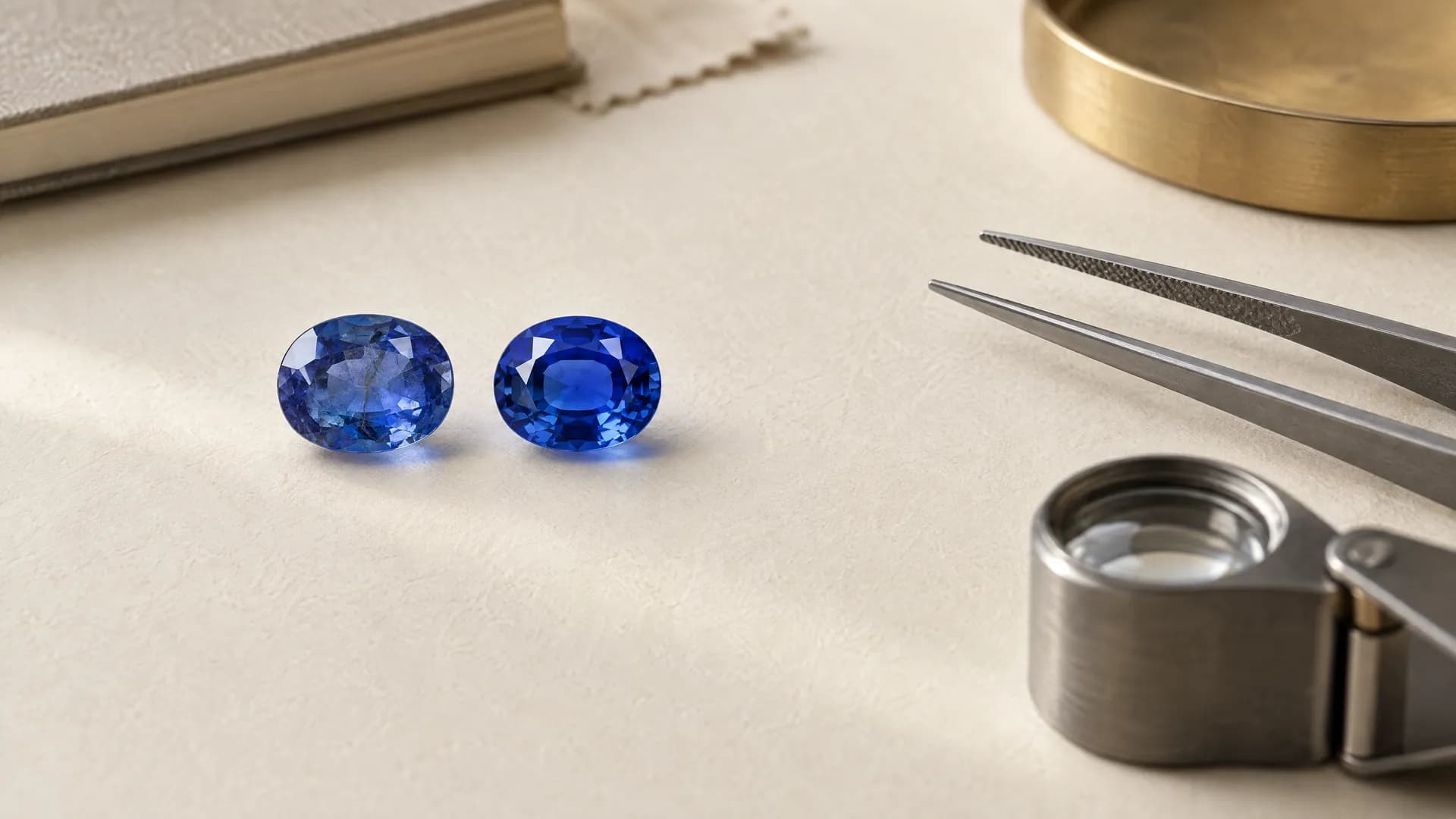
A synthetic, or lab-created, sapphire is real sapphire in substance: the same mineral, corundum, with the same chemistry, hardness and optics, grown in a factory instead of in the earth. You usually cannot tell the two apart by eye or with home tests. A gem lab separates them by the growth marks and chemistry each process leaves behind, and the difference that matters most to a buyer is price: lab sapphire can be grown to order, so it costs a fraction of a natural stone that looks the same.
Natural, synthetic, simulant: three different things
- Natural sapphire formed in the earth and was mined.
- Synthetic sapphire, also sold as lab-created, lab-grown, or under a manufacturer's name followed by "created", is corundum made in a lab. It is not fake in the chemical sense; it simply was not mined.
- A simulant only looks like sapphire: blue glass, a blue synthetic spinel, or a doublet glued together from two materials. It usually fails basic tests that a synthetic passes.
Where lab sapphire turns up
Lab corundum is everywhere once you look for it, and not always where you would expect.
- On your wrist. The "sapphire crystal" on many watches is lab-grown sapphire, chosen for hardness rather than beauty.
- In old jewelry. Synthetic sapphires appear in original Art Nouveau and Art Deco pieces, so the age of a setting proves nothing about the stone in it.
- Posing as other gems. Color-change synthetic sapphire has been sold to imitate alexandrite since the early 1900s.
- As star stones. Lab-grown star sapphires are made by inducing the fine inclusions that create the star.
- In parcels of rough. Gem labs have found lab-grown sapphire, coated with resin that imitates the rock skin of natural crystals, mixed into parcels of mined rough.
How lab sapphire is made
| Method | How it works | What a lab looks for |
|---|---|---|
| Flame fusion (Verneuil) | Powder is dropped through a flame and builds up into a crystal on a rotating pedestal. The cheapest and most common method. | Curved growth bands, which can show clearly under short-wave UV light, and gas bubbles |
| Crystal pulling (Czochralski) | A seed is dipped into molten material and slowly drawn out as the crystal grows. | Few easy clues; labs combine microscopy with chemistry |
| Flux growth | Ingredients dissolve in a molten flux and crystallize as it cools, over months. Made since the 1960s. | Flux residues in wispy, fingerprint-like patterns; metallic platelets from the crucible |
| Hydrothermal | Crystals grow on a seed from a hot, pressurized water solution. Slow and expensive. | Chevron-shaped or zigzag growth patterns |
 Illustration
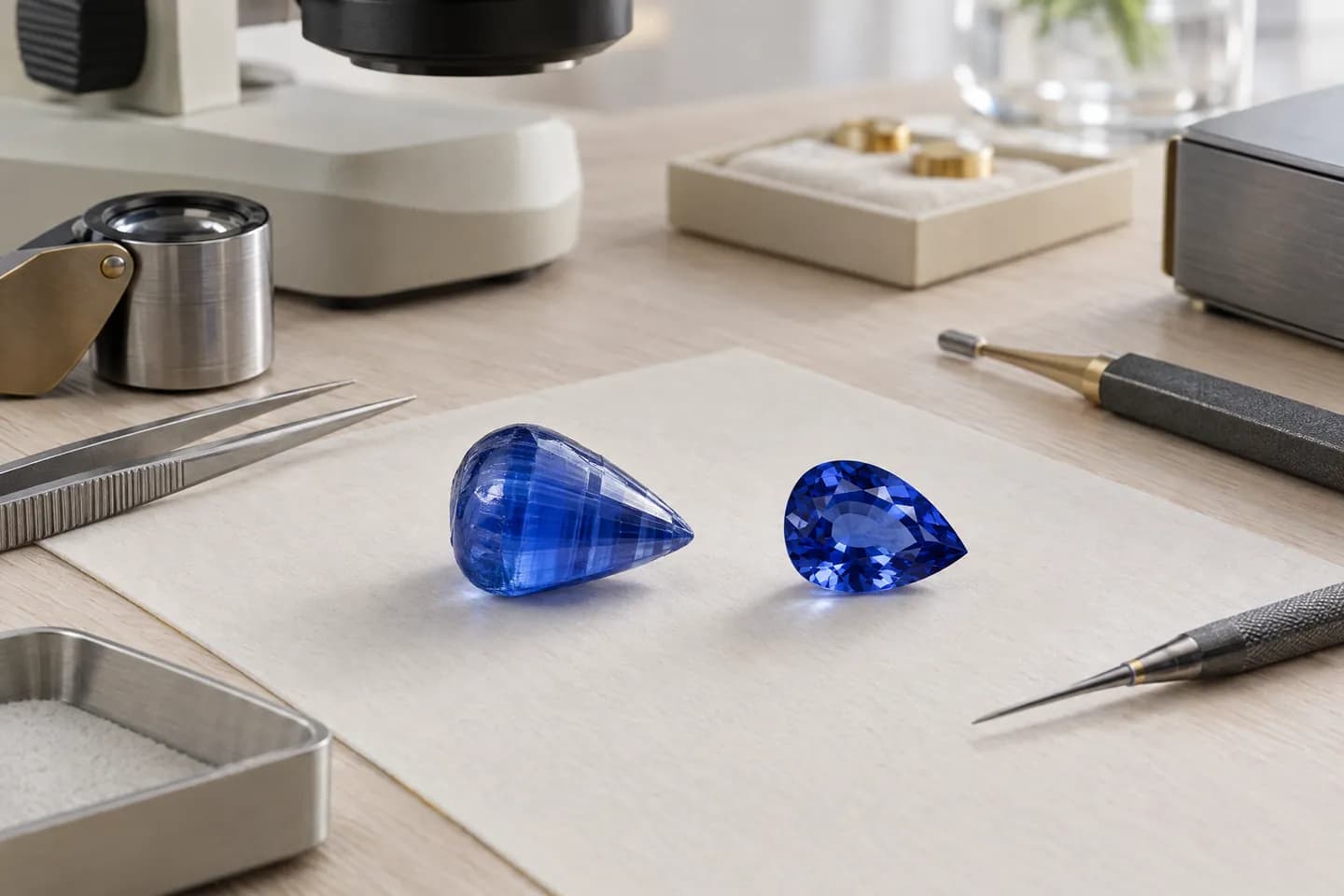
Flame fusion still accounts for most of the synthetic ruby and sapphire on the market. Flux-grown and hydrothermal stones take longer and cost more to make, and they, like pulled stones, can be hard to tell from natural sapphire.
How a lab tells them apart
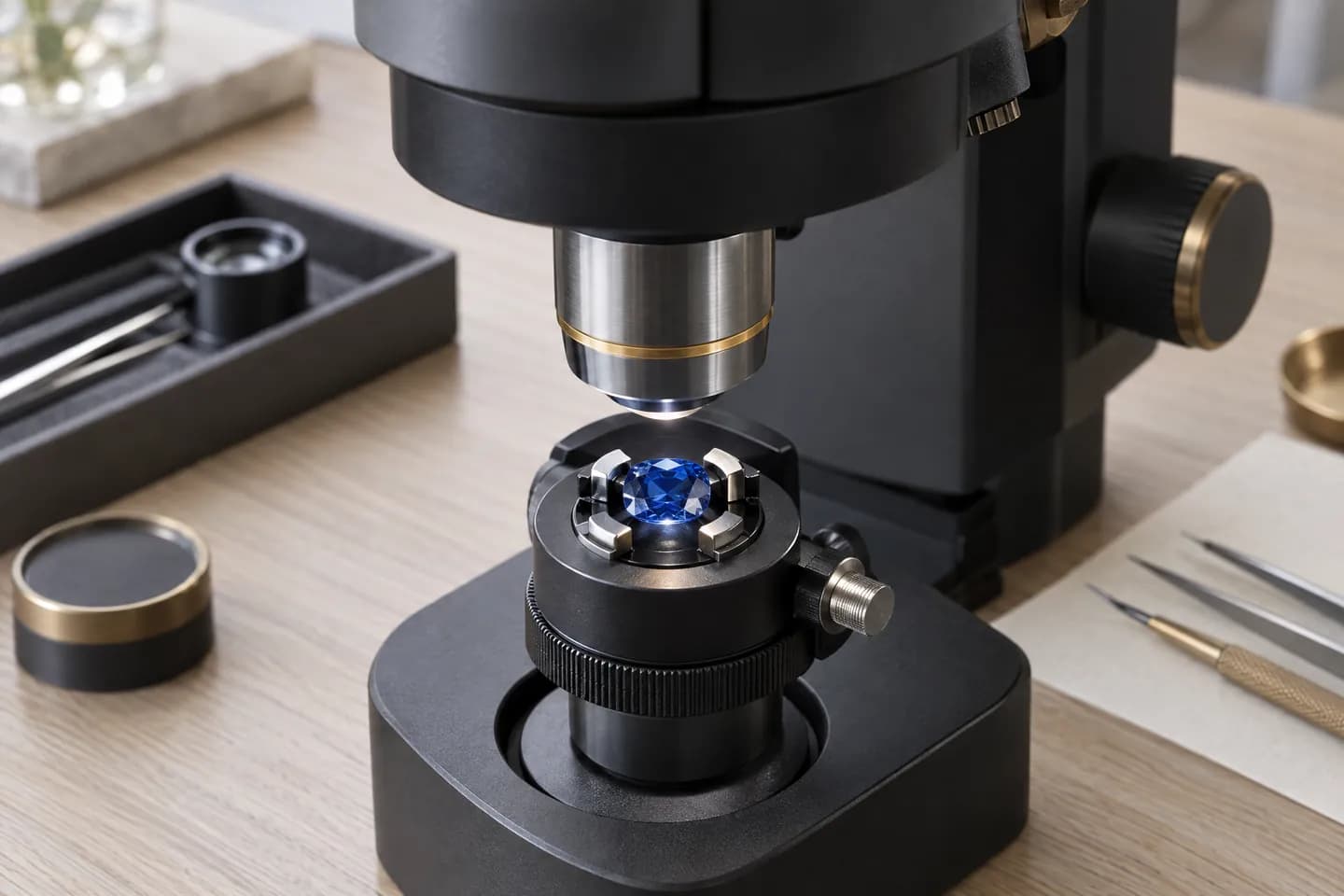
Because a synthetic is corundum, the simple tests return the same answers: refractive index, hardness, density. The essential instrument is the microscope, backed by chemistry.
- Growth patterns. Natural sapphire grows in straight, angular color zones. Flame-fusion sapphire grows in curved bands, a pattern nature does not produce in corundum.
- Inclusions. Natural stones carry the mineral crystals, silk and healed fractures of the rock they grew in. Synthetics carry the marks of their process: bubbles, flux, seed plates, metal from the crucible.
- Chemistry. Natural corundum picks up trace elements from its host rock, and labs measure them. That fingerprint helps when a stone is too clean to judge under the microscope.
 Illustration
Two cautions. Some synthetics contain natural-looking inclusions: GIA has described a flame-fusion lab ruby full of dark crystals that resembled those in mined corundum. And labs have documented natural sapphire with a thin layer of synthetic ruby grown over it, where the color sat almost entirely in the synthetic skin. Neither would be caught outside a proper lab.
Home tests, such as breath fog, a scratch test or a UV torch, cannot separate natural from lab-grown sapphire. Both are corundum, and both pass.
What lab sapphire is worth
Price follows how a stone was made, not what it is made of. Flame-fusion sapphire is inexpensive. Flux and hydrothermal growth take months and costly equipment, so those stones cost more, though still a fraction of a comparable natural stone. A synthetic can be grown in the color and size a buyer wants, which is exactly what natural sapphire cannot do. Natural sapphire's price rests on scarcity, and it climbs steeply with color, clarity and size.
A lab-grown sapphire is a reasonable choice for a bright, durable stone at a modest price. Buy it for how it looks and wears, not as a store of value. This is not investment advice.
Disclosure: the words that matter
Selling a synthetic as natural is deception. In the United States, the Federal Trade Commission's Jewelry Guides call for a qualifier, such as "laboratory-grown", "laboratory-created" or a manufacturer's name followed by "created", that is as conspicuous as the word sapphire itself. "Cultured" is acceptable only with a clear statement that the stone is not mined. Trade bodies set similar rules for their members, and rules elsewhere differ. A lab report is the same everywhere, though: if a stone is synthetic, the report's identification says so.
Ask more questions when a listing:
- puts "created", "lab" or "cultured" in small print, or leaves it off the receipt;
- calls a stone "sapphire" with no word on whether it is natural;
- offers a large, clean, saturated sapphire at a price that only a synthetic could support;
- has a report you cannot look up with the lab that supposedly issued it.
What Everystone does about it
Every lot in the shop states how far it has been checked. On a cross-checked lot, the report behind it has been confirmed against the issuing lab's records; full verification adds a hands-on inspection that matches the report to the stone itself. A report describes a stone; the passport proves it's this one. Every purchase is a protected payment, and you can arrange an independent check during the inspection window before any money moves to the seller.
If you own a sapphire with a report, the free Registry records it; once the report number is confirmed with the issuing lab, the record says so, and says plainly that a paper check is not a stone check. To check a report number yourself, see how to cross-check a lab report.
Questions
Is a synthetic sapphire a real sapphire?
Chemically, yes. A synthetic sapphire is corundum with the same composition, hardness and optics as a mined sapphire; it was grown in a lab rather than formed in the earth. It must be sold with a qualifier such as 'lab-created' or 'synthetic', and it is priced far below natural sapphire.
Is a lab-created sapphire worth anything?
It is worth roughly what it costs to grow, cut and sell, which is a fraction of a comparable natural stone. Flame-fusion stones are inexpensive; flux-grown and hydrothermal stones cost more because their growth is slow. Buy one for its looks and durability, not as a store of value.
Can a jeweler tell if a sapphire is synthetic?
Sometimes. A jeweler with a microscope may spot the curved growth bands or gas bubbles of a flame-fusion stone. Flux-grown, pulled and hydrothermal synthetics can be very convincing, and some carry natural-looking inclusions, so for anything valuable the answer should come from a gem lab report.
Is the sapphire crystal on my watch real sapphire?
It is synthetic sapphire: colorless corundum grown in a lab and used because it is very hard to scratch. It is the same material a cutter could facet into a lab-created gem, just without the color.
Sources
- GIA — An Introduction to Synthetic Gem Materials
- GIA Gems & Gemology — Chart: Inclusions in Natural, Synthetic, and Treated Sapphire
- GIA Gems & Gemology — Curved Banding in Flame-Fusion Synthetic Sapphires
- GIA Gems & Gemology — Natural sapphires with synthetic ruby overgrowth
- U.S. Federal Trade Commission — Jewelry Guides (16 CFR Part 23)
- Europa Star — Sapphire: the quest for transparency (2022)
- GIA Gems & Gemology — An interesting set of blue rough gemstones (2022)


