
Buying a sapphire
Sapphires for sale, and what to check before you buy one
Loose sapphires in blue and fancy colors, heated and unheated. Every lot says what has been checked about the seller and the stone, and your payment is held until the seller confirms it.
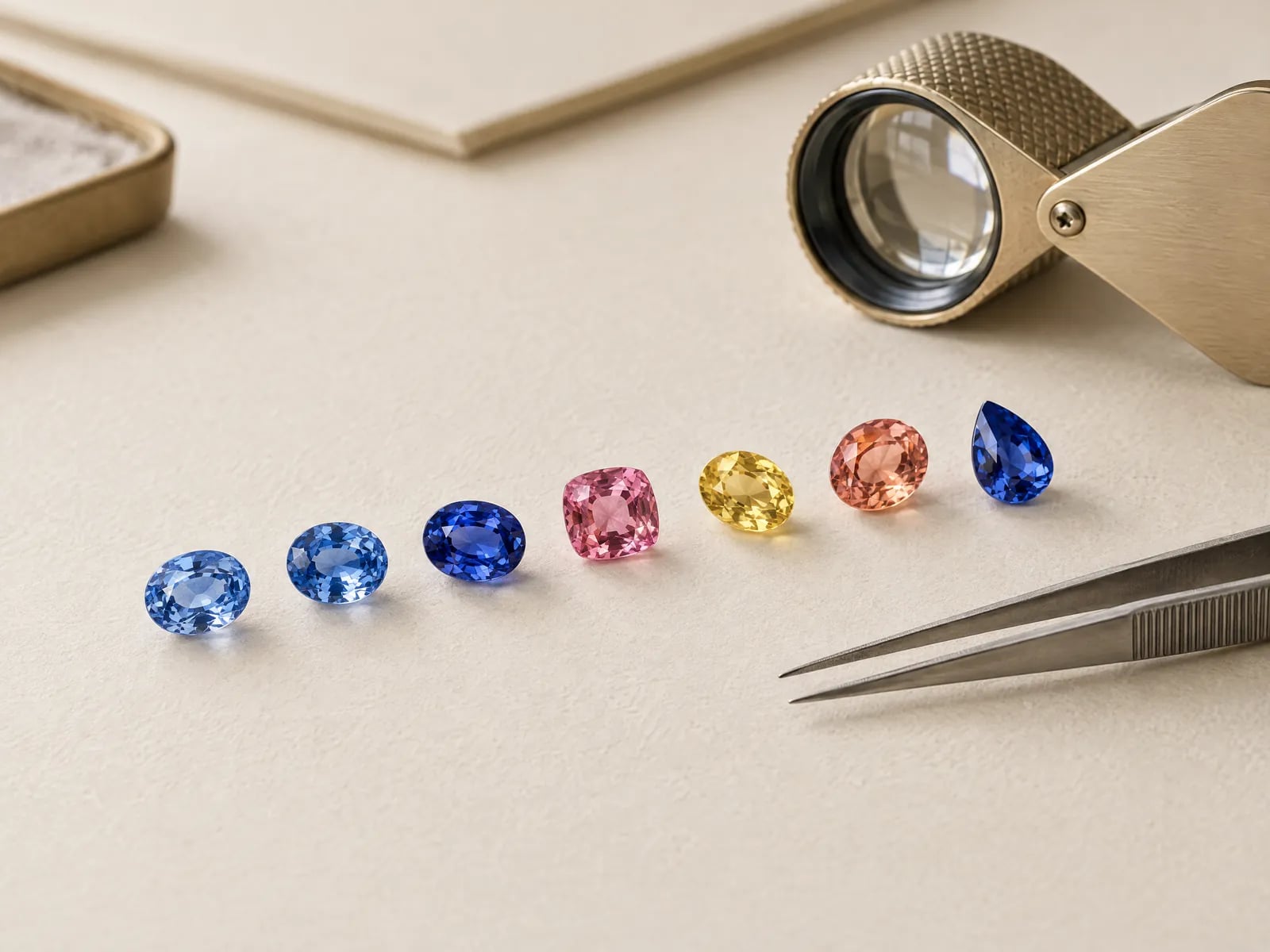 Illustration
On the shop now
Sapphires you can buy today
Every lot says what has been checked about the seller, the stone and its report, and nothing more. Here are the ones checked furthest, the dearer first; the shop has the rest.
- On the shop
- 2,530 sapphires
- Prices
- $100 to $166,770
- Origins, as stated
- Sri Lanka 651 · Myanmar 65 · Madagascar 52 · Thailand 31
- Stated unheated
- 553

Unheated Ceylon sapphire, 8.61 ct
Sri Lanka · Unheated
$32,115Lot 11176
- T2
- GRS report GRS2014-106596 — checked with the laboratory's records
- Unheated — per the GRS report
- Seller verified
- Stone verified
- Custody available
Sold by Sukhadia Group
/p/es-0289
Unheated Ceylon pink sapphire, 5.55 ct
Pink · Sri Lanka · Unheated
$17,760Lot 11350
- T1
- GRS report GRS2013-073563 — checked with the laboratory's records
- Grade: Fine — on the facts our desk checked
- Unheated — per the GRS report
- Seller verified
- Stone verified
- Passport
Sold by Sukhadia Group
/p/es-0290
Unheated Ceylon yellow sapphire, 14.86 ct
Yellow · Sri Lanka · Unheated
$8,767Lot 11363
- Seller verified
- Stone verified
- Passport
Sold by Sukhadia Group
/p/es-0285
Unheated Thai blue sapphire, 22.28 ct
Blue · Thailand · Unheated
$120,399Lot 10355
- T2
- GIA report 6541392616 — checked with the laboratory's records
- Origin: Thailand — per the GIA report, 2026
- Grade: Exceptional — on the facts our desk checked
- Unheated — per the GIA report
- Seller verified
- Report checked with the lab
- Custody available
Sold by BangkokGemsMarket
/p/es-0216
Unheated Burmese blue sapphire, 13.99 ct
Blue · Myanmar · Unheated
$111,920Lot 11070
- T2
- GRS report GRS2015-100007 — checked with the laboratory's records
- Origin: Myanmar — per the GRS report, 2015
- Grade: Exceptional — on the facts our desk checked
- Unheated — per the GRS report
- Seller verified
- Report checked with the lab
- Custody available
Sold by Sukhadia Group
/p/es-0243
Unheated African royal blue sapphire, 11.88 ct
Royal blue · Africa · Unheated
$76,626Lot 11319
- T2
- GRS report GRS2015-060825 — checked with the laboratory's records
- Grade: Fine — on the facts our desk checked
- Unheated — per the GRS report
- Seller verified
- Report checked with the lab
- Custody available
Sold by Sukhadia Group
/p/es-0260
Unheated Ceylon sapphire, 14.62 ct
Sri Lanka · Unheated
$54,533Lot 11196
- T2
- GRS report GRS2015-073344 — checked with the laboratory's records
- Origin: Sri Lanka — per the GRS report, 2015
- Grade: Exceptional — on the facts our desk checked
- Unheated — per the GRS report
- Seller verified
- Report checked with the lab
- Custody available
Sold by Sukhadia Group
/p/es-0258
Unheated Ceylon sapphire, 5.24 ct
Sri Lanka · Unheated
$51,404Lot 11111
- T2
- GRS report GRS2016-060142 — checked with the laboratory's records
- Origin: Sri Lanka — per the GRS report, 2016
- Grade: Exceptional — on the facts our desk checked
- Unheated — per the GRS report
- Seller verified
- Report checked with the lab
- Custody available
Sold by Sukhadia Group
/p/es-0245What sets the price
What you pay for in a sapphire
Five things decide most of the price. Compare two stones on all five, not on carats and color alone.
Color
For blue sapphire, saturation and tone come first: a vivid, medium to medium-dark blue costs far more than an inky, grayish or very light one. “Royal blue” and “cornflower” are color descriptions some labs use under their own criteria, not grades every report carries.
Heated or unheated
Most sapphires are heated, and the trade accepts it. An unheated stone costs more at the same quality, but only a recognized lab's report stating no indications of heating supports that premium. Diffusion, beryllium diffusion in particular, adds color from the surface inward and is worth far less; the report names it.
Origin
Kashmir is the legendary name and rarely offered; Burma (Myanmar) and Sri Lanka follow, and Madagascar supplies much of today's fine material. An origin is worth paying for only when a lab report states it.
The lab report
Treatment and origin are a laboratory's opinion about one stone. Ask whose report it is, how recent it is and whether it can be looked up at the lab, then make sure it describes the stone you are buying.
Size
Fine blue sapphire is found in larger sizes than fine ruby, but the price per carat still climbs above three to five carats, and clean unheated stones in those sizes are rare.
Types of sapphire
Blue, fancy colors and padparadscha
Sapphire is corundum in every color but red. Blue is the classic; pink, yellow, purple, green, white and color-change sapphires each trade on a price scale of their own, and star sapphires, cut as cabochons, show a six-rayed star under a single light.
Padparadscha, the pinkish orange to orange-pink sapphire, is one of the rarest colors and the one where paperwork matters most: labs apply the name only within their own color range, and some test whether the color is stable. For yellow, orange and padparadscha stones, ask whether the report rules out diffusion.
Before you buy
What to check before you buy a sapphire
- A report from a recognized laboratory, recent, that can be looked up on the lab's own website.
- The treatment in the report's words: heated, no indications of heating, or diffusion — not the seller's.
- Natural, not lab-grown: synthetic sapphire has been made for more than a century and can look flawless.
- An origin only if the report states it; a seller's origin is a claim, not a finding.
- The stone in the photos and the stone in the report match: weight, measurements, shape and color.
- What the lot says has been checked about the seller and the stone — and what you can add before it ships.
Buying on Everystone
How buying a sapphire works here
Everystone holds no stock of its own. The stones are listed by vetted dealers and private owners, each lot says what has been checked, and we hold your payment and settle the purchase.
- 01
Choose a lot
Each lot shows the stone's facts, who sells it and what has been checked about the seller and the stone. Browsing needs no account.
- 02
Buy with protected payment
You pay the price, the buyer's premium (3–7%, by price) and a settlement fee of 3%, in USDT. Your payment is held. The seller confirms the stone within 48 hours, 96 at most; if they can't, you get it back in full. Once you have the stone, you have 48 hours to check it.
- 03
Add a check, if you want one
An independent lab check, an Everystone Passport ($750) or custody — what the stone's price allows. Nothing is added unless you choose it; what you choose is billed once the stone is confirmed.
- 04
Receive it, check it, confirm
Insured delivery, collection at a jewelry store ($30 handover) or in person in Bangkok. The seller is paid only after you confirm the stone.
Read next
Before you choose a sapphire
Guides on the questions buyers ask most.
Questions people ask
Is an unheated sapphire worth the premium?
At the same color, clarity and size an unheated sapphire costs more, and it is the rarer stone, but only a recognized lab's report saying no indications of heating supports the price. Without one, assume heat and pay for heat.
What is a loose sapphire?
A stone sold on its own, not set in jewelry. Buying loose lets you see the stone and its report as they are, have it checked, and choose the setting yourself; a jeweler mounts it afterwards.
Which sapphire color is the most valuable?
For blue, a vivid medium to medium-dark blue without gray. Among the fancy colors, padparadscha is the rarest and usually the dearest. Each color has its own price scale, so compare a pink sapphire with pink sapphires.
Can I buy a sapphire online safely?
Buy where the money is held until the seller has confirmed the stone and you have checked it, where the lot says what has been checked, and where the report can be looked up at the lab. On Everystone every purchase is a protected payment: Your payment is held. The seller confirms the stone within 48 hours, 96 at most; if they can't, you get it back in full. Once you have the stone, you have 48 hours to check it.
What do I pay on top of the price?
The buyer's premium (7% under $1,000, 5% from $1,000 to under $5,000 and 3% from $5,000) and a settlement fee of 3%. Insured delivery is the seller's terms: included in the price, or a stated charge from $60; collecting the stone in Bangkok is free. An independent lab check, a Passport or custody are optional, billed only once the stone is confirmed.
What if the sapphire I want is not on the shop?
Tell the desk what you are looking for — the color, the size, your budget and the report you need. A person on the desk answers by hand and looks through the vetted dealers' stock for you.
Find your sapphire
Browse every sapphire on the shop, or tell the desk what you are looking for and a person will search the vetted dealers for you.